Sloboda Ukraine · since 1655
The city of three bags on the Psel
There was once an oak Cossack fortress here with 27 towers. Later Sumy became the sugar capital of an empire, and today it is a border city that keeps living under shelling. Here is where it came from, what to see and who it is proud of.
The city in brief
Sumy in three paragraphs
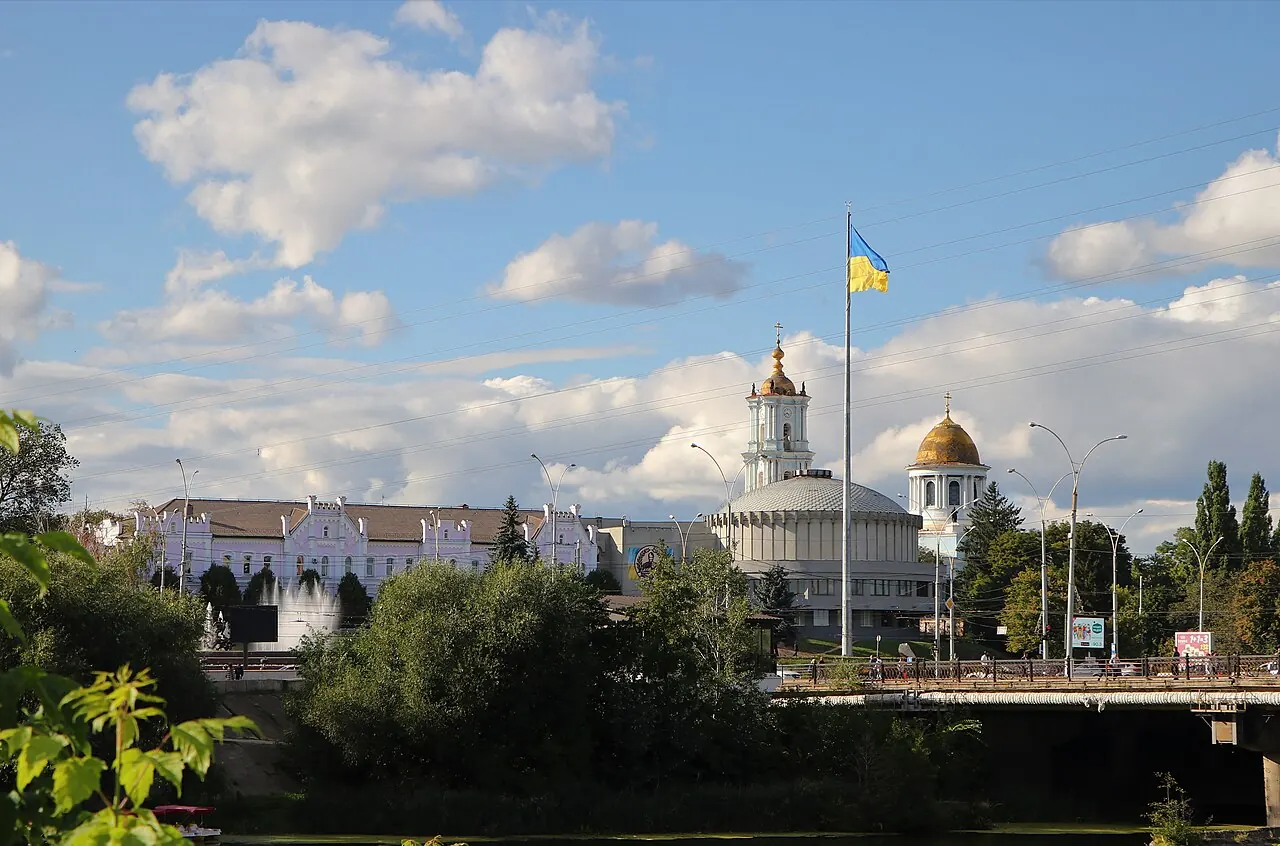
Sumy is a regional capital in north-eastern Ukraine, on the high bank of the Psel where the little Sumka river flows into it. It was founded in the mid-17th century by Cossacks from Right-Bank Ukraine who were fleeing war and looking for new land. Colonel Herasym Kondratiev led them, and within a few years the largest fortress in Sloboda Ukraine stood on the hill.
In the 19th century the city grew rich on sugar. The Kharytonenko family built sugar mills, a cadet school, hospitals and cathedrals, and Sumy became known as the sugar capital. Chekhov came here for the summer, Tchaikovsky stayed at a nearby estate, and the Sumy hussars fought across Europe.
Today Sumy has roughly a quarter of a million residents, three universities, theatres and a philharmonic with one of the finest organs in the country. Since 2022 the city has lived under fire: it held out under encirclement that spring, and in 2025 it survived the Palm Sunday strike. Sumy keeps working, studying and supporting the front.
Sections
Where to start
History
From the oak fortress and the Cossack regiment to the sugar empire, the wars of the 20th century and the defence of 2022.
Read →2022 → 2026Defence of Sumy
How the city held out under encirclement in 2022, what came next and what is happening now.
Read →30 placesSights
Cathedrals, the Altanka, sugar barons' mansions, theatres, fountains and parks — and what is damaged or open now.
Explore →23 namesPeople
Founders, patrons, writers, Olympic champions and heroes connected with Sumy.
Meet them →Rieger-KlossCulture
The Shchepkin Theatre, the philharmonic organ, museums, festivals, universities, sport and city symbols.
Find out →Khimik · Basy · Luka · "Hiroshima"Neighbourhoods
Where Sumy's neighbourhood names come from, which villages the city absorbed and what is there now.
Explore →Hotels · cafés · parksLeisure
Hotel history since 1878, restaurants and cafés, the Sumy Chestnuts cake, parks, cinema and sport.
Explore →PselNature & trips
Rivers and lakes, the biggest parks, the Mohrytsia chalk hills and the towns of the region worth a trip after the war.
Routes →?Questions
Why Sumy is called Sumy, when City Day is, what the coat of arms means and how to get there.
Answers →Did you know?
The Sumy fortress had 27 towers and 8 gates, with defences running for 7 km. The city never had stone walls; everything was built of oak.
In numbers
Sumy by the numbers
Today
A city that holds on
On the first day of the full-scale invasion, 24 February 2022, there was already fighting in the streets of Sumy. By the next evening the city was all but surrounded. It was held by territorial defence, volunteers and ordinary residents with petrol bombs. On 8 March about five thousand people got out through a humanitarian corridor, and on 8 April the last Russian units left Sumy Oblast.
Since then the city has lived under missiles, drones and guided bombs. On 13 April 2025, Palm Sunday, two Iskander-M ballistic missiles hit the centre as people walked to church and rode a trolleybus. Thirty-five people were killed, two of them children, and more than 120 were wounded. The philharmonic, theatres, art museum and university were all damaged that day.
Even so, Sumy is not emptying out. Cafés open, the theatre plays in shelters and Sumy State University students sit their exams. The best thing you can do for the city now is to know its story and come when it is safe.