Home / History
History
The history of Sumy
Nearly four centuries that took in Cossack freedom, imperial reforms, a sugar boom, two world wars and a new war for independence.
The name
Why Sumy is called Sumy
Nobody knows for sure, and locals love to argue about it. The most likely answer comes from the rivers. Streams called the Suma and the Sumka flowed here long before the town; today's Sumka was probably once the Suma, and the name Sumka belonged to what is now the Strilka. So the Cossacks most likely named their settlement after the river. 17th-century documents record it as "Sumyn horod", the town on the Suma.
The second version is a treasure legend. Supposedly the first settlers found three hunting bags full of gold on the bank of the Psel. Historians suggest such bags could really have been lost by messengers, either the tsar's or Bohdan Khmelnytsky's. This is the legend that made it onto the coat of arms: three black bags on a silver field. Since 2008 a monument called "Sumka", a bag above a well, has stood on Voskresenska Street.
The third is a joke. They say the Cossacks pined ("sumuvaly") for the wives and sweethearts they had left on the Right Bank, so they named the place Sumy, from "sum", sorrow. A nice play on words, but nobody takes it seriously.
1652–1658
The Cossacks from Stavyshche
Until the mid-17th century the lands on the Psel were part of the Wild Field, a sparsely settled steppe frontier where Tatar raiding parties roamed. There were only old hillforts here; the settlers mention one of them, the Berlytske hillfort, right where Sumy would stand.
After the defeats of the Khmelnytsky uprising, thousands of families from the Right Bank moved east to the free lands of the Muscovite state. Among them was Herasym Kondratiev, otaman of the town of Stavyshche in the Bila Tserkva regiment. He brought Cossacks and peasants to the Psel, and on 24 June 1655 about a hundred Cossacks petitioned the tsar for permission to settle. It was granted on 26 June 1655, and that is the official founding date.
There is another view, though. Mykhailo Hrushevsky, Dmytro Bahalii and Mykola Kostomarov wrote of 1652, relying on governors' reports and a document dated 7160 from the creation of the world, which is 1652. It is quite possible that a small Cossack settlement with a church existed here before Kondratiev came, and the 1655 petition simply made official what was already there.

1656–1789
An oak fortress on the hill
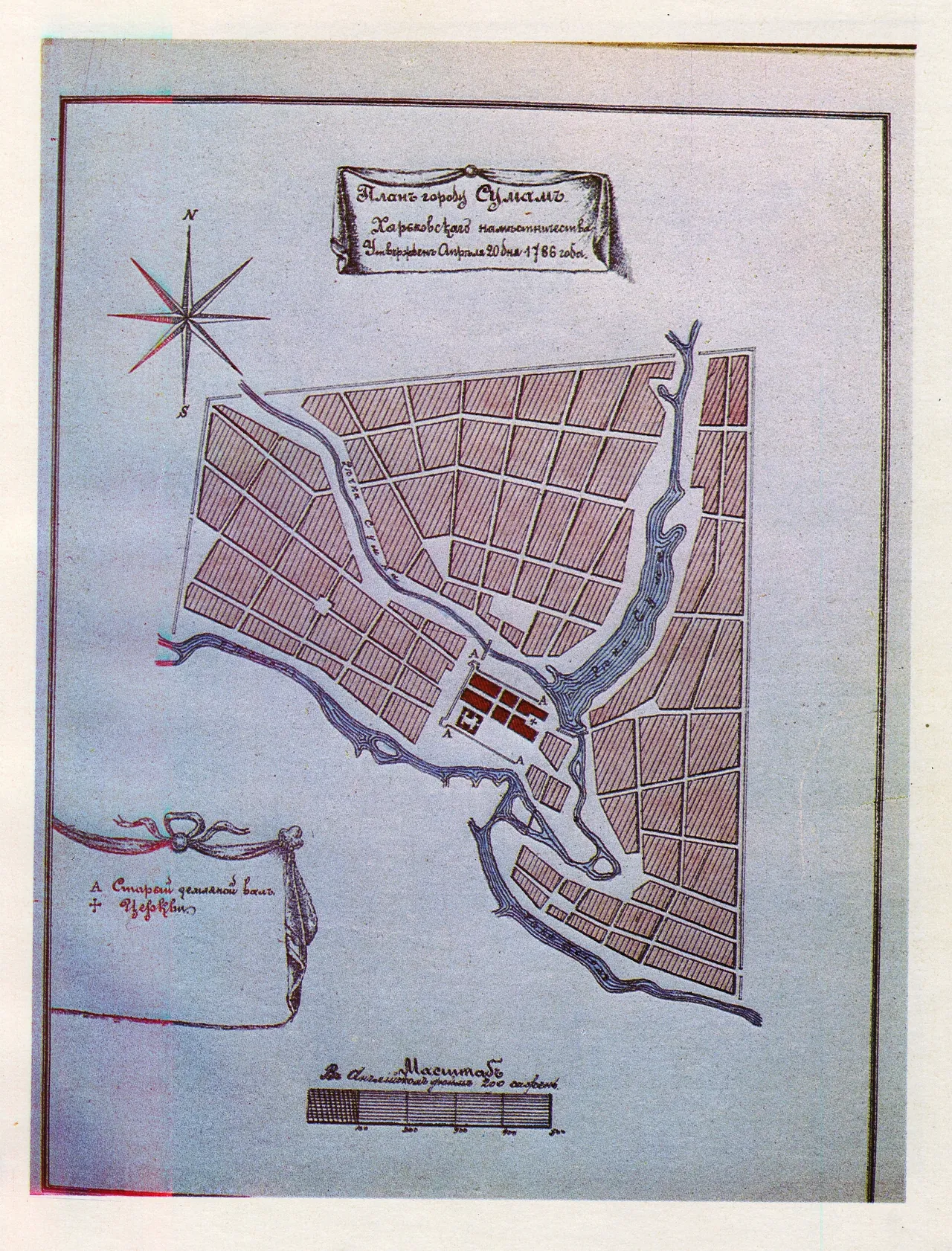
On 1 July 1656 the settlement was declared a town and work began on the fortress. Governor Kyrylo Arseniev came from Moscow with 52 workers, but the settlers did most of the labour themselves. They chose the site well: a hill between the Psel, the Sumka and the old bed of the Sumka, now called the Strilka. Today that is the area between Soborna and Voskresenska streets; the citadel stood near today's Shevchenko Square and the esplanade reached Independence Square.
The fortress was a big one: 27 towers, four of them gate towers, and eight gates in the outer wall, among them the Pokrovski, Vorozhbianski, Moskovski and Mlynovi gates. The defences ran for about seven kilometres, fronted by a ditch of the same length. Walls and towers were oak, on an earthen rampart with a palisade. The city never got stone walls. In 1658 another ditch was dug between the Psel and the Strilka to cover the south, and in the 1670s a fortified suburb was added. That made Sumy the largest fortress in Sloboda Ukraine.
The wooden town's worst enemy was not the Tatar cavalry but fire. The fires of 1704 and 1706 destroyed hundreds of homesteads; in 1706 alone about 250 houses and two towers burned. Once the frontier had moved far to the south the fortress was no longer needed, and it was dismantled in 1786–1789.
The fortress on old maps


1658–1765
The Sumy Sloboda Regiment
At the end of 1658 the Sumy Sloboda Cossack Regiment took its final shape, with Sumy as its regimental town. Herasym Kondratiev led it for more than forty years, until 1701. The regiment had twenty companies and covered a wide area, including Sudzha, which is now in Russia's Kursk region. In 1732 about 86,000 people lived on its lands, including 3,700 elect Cossacks.
Sumy Cossacks fought at Chyhyryn in 1677–1678, went on the Crimean campaigns of 1687 and 1689 (Sumy was the assembly point), took Azov in 1695–1696 and fought in the Great Northern and Seven Years' wars. In the winter of 1708–1709, at the height of the Northern War, Peter I made his headquarters in Sumy, living here with his son Alexei and Field Marshal Sheremetev a few months before Poltava.
The Kondratievs became a true dynasty. After Herasym the regiment passed to his son Andrii, who was killed by Kondratii Bulavin's Don Cossacks, and then to his grandson Ivan (died 1726 or 1727). Herasym and Andrii paid for the Resurrection Church, built in 1696–1702, the first stone building in Sumy and the family burial vault. The founder himself was buried there in 1701. By 1785 the family owned more than 130,000 hectares.
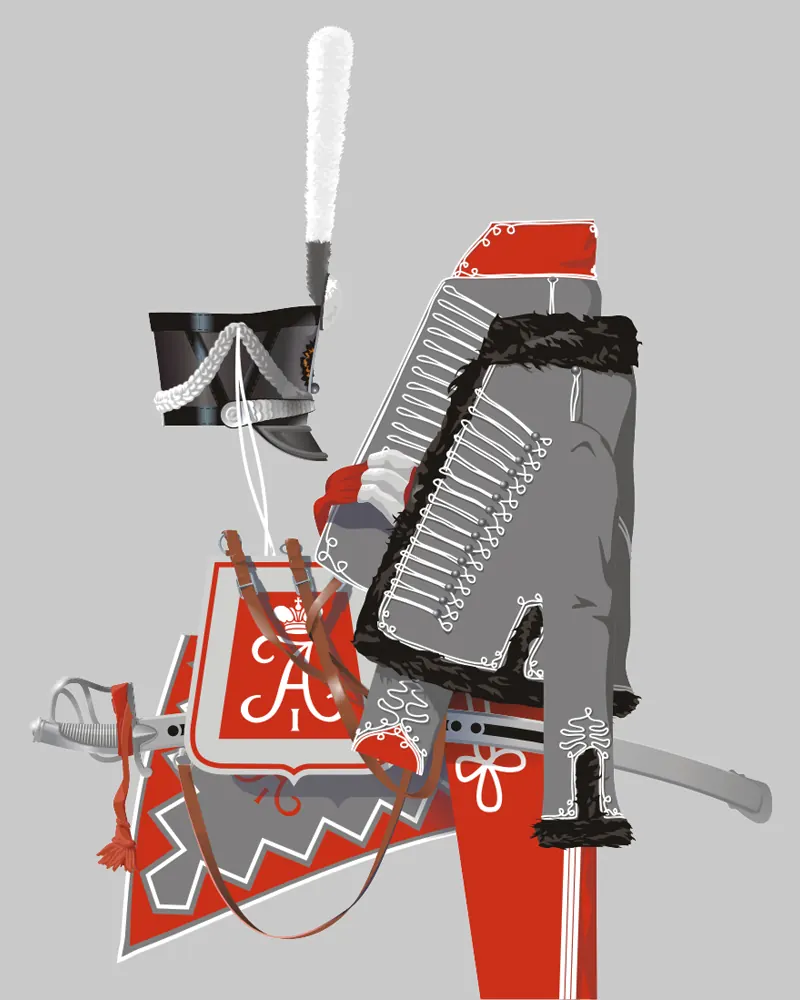
The town grew from 2,700 people in 1660 to 7,700 in 1732. A glassworks opened in 1710, five schools were running by 1732, and from 1732/34 to 1743 the commission that governed all the Sloboda regiments sat in Sumy. In 1765 Catherine II abolished Cossack self-rule in Sloboda Ukraine, and the regiment became the Sumy Hussar Regiment.
The regiment

1765–1869
A county town of the empire
After 1765 Sumy became the centre of Sumy Province in the Sloboda Ukraine governorate, then from 1780 a county town of the Kharkiv vicegerency and later of the Kharkiv governorate. On 21 September 1781 the city received its coat of arms: three black hunting bags with gold buttons on a silver field, two above and one below. Sumy still carries it today.
The Transfiguration Cathedral went up in 1776–1788, a public school opened in 1790 and the first theatre in 1806. By the mid-19th century Sumy had a glassworks, tanneries and brickworks, and four big fairs a year drew merchants from all over Sloboda Ukraine. In 1850 the town had more than 10,000 inhabitants.
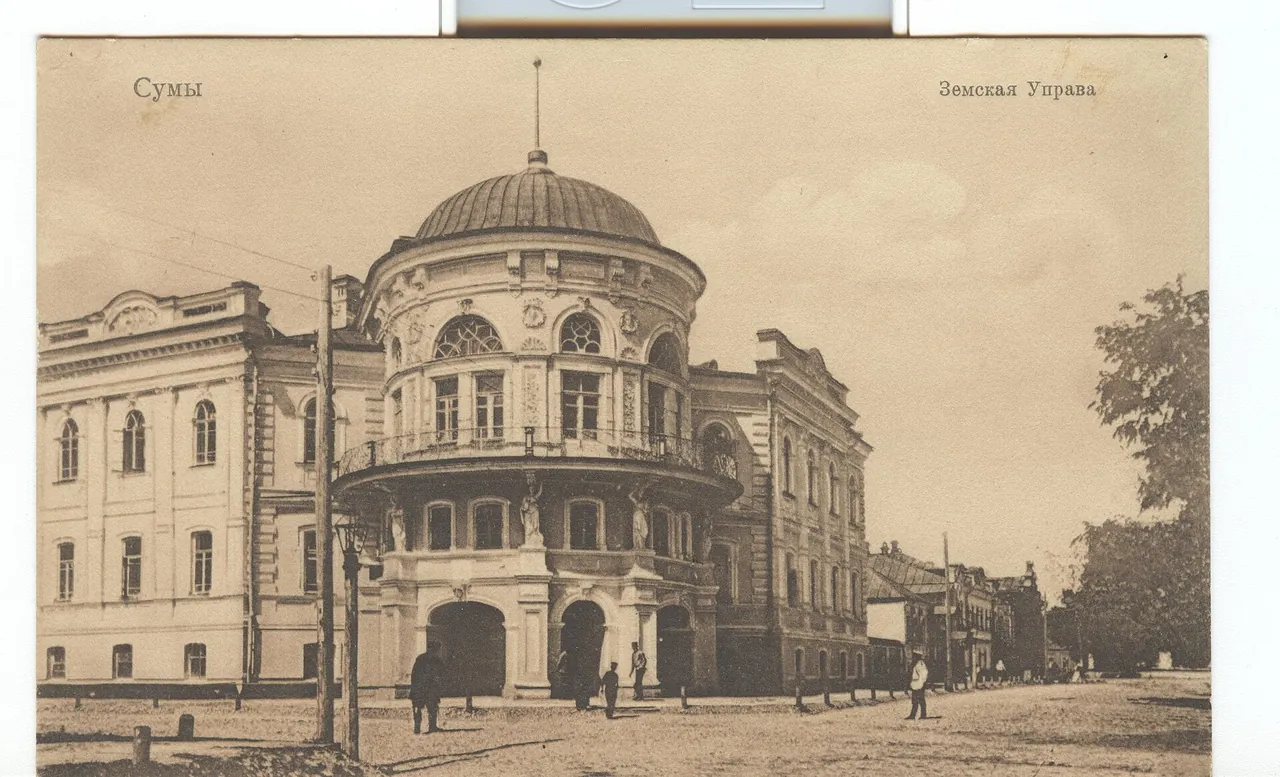
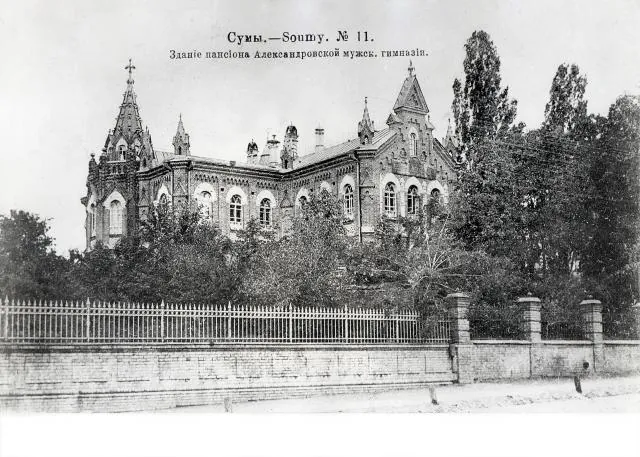
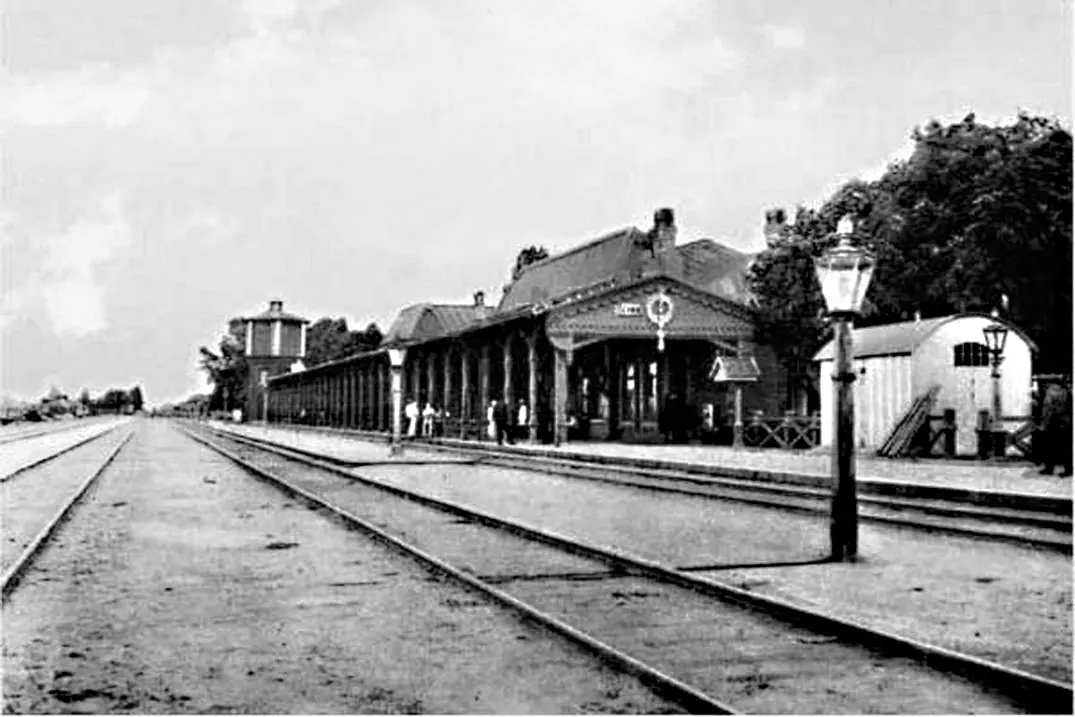
Old Sumy in photos and postcards




1869–1917
The sugar capital
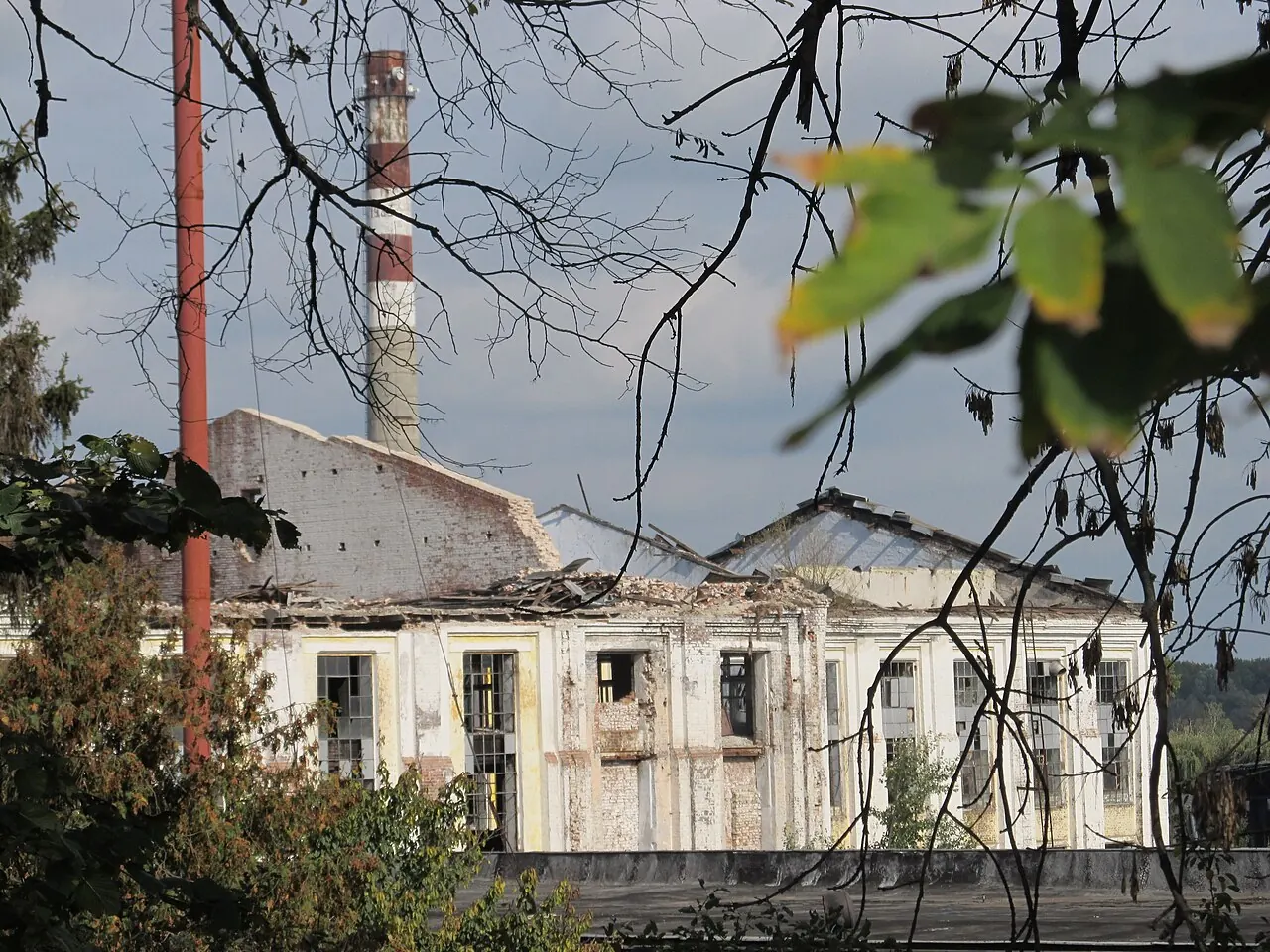
The main story of 19th-century Sumy is the story of the Kharytonenko family. Ivan Herasymovych Kharytonenko, a peasant's son from Nyzhnia Syrovatka, started out in trade and in the 1860s founded the trading house "I. H. Kharytonenko and Son". In 1869 he opened the Pavlivka refinery in Sumy, which is said to have made 17% of all the empire's sugar. By the early 20th century his son Pavlo's share in the business exceeded 15 million roubles.
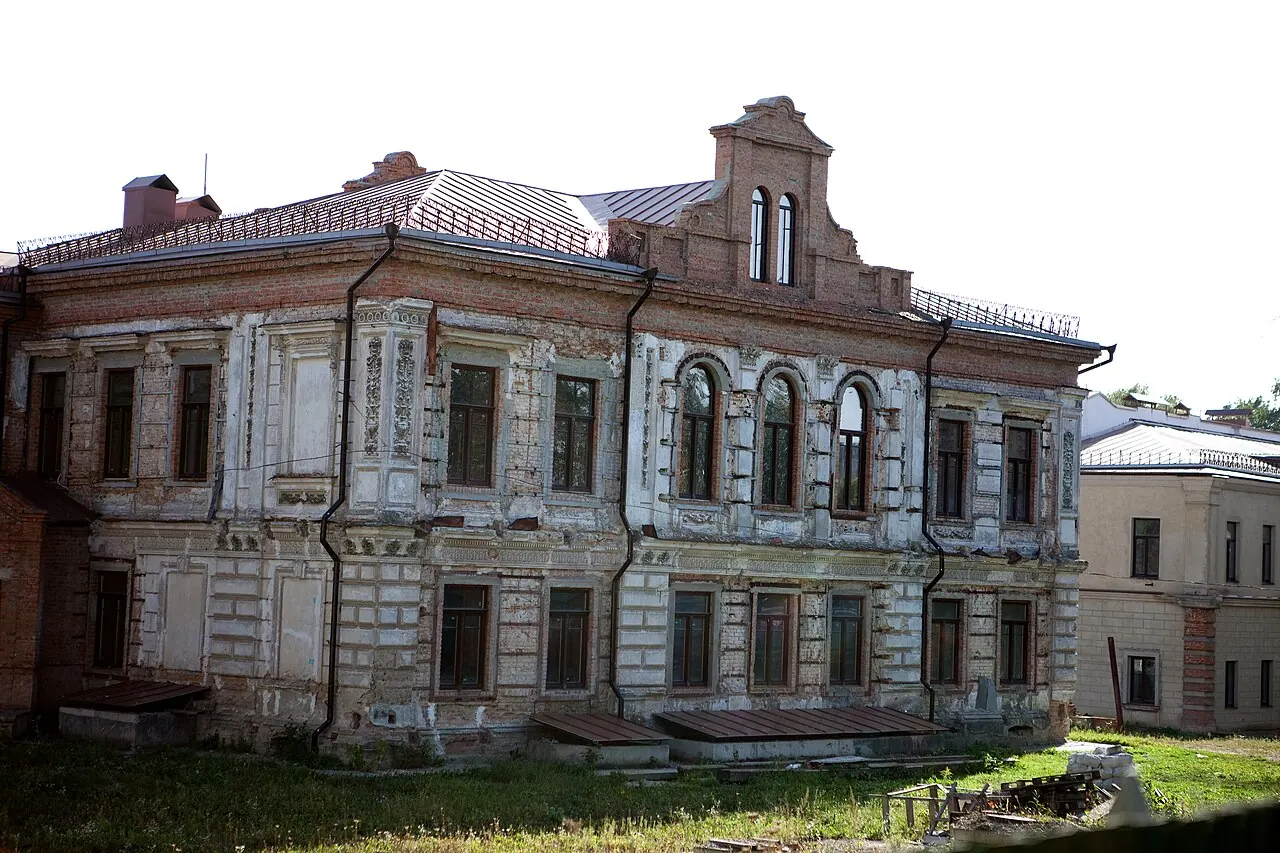
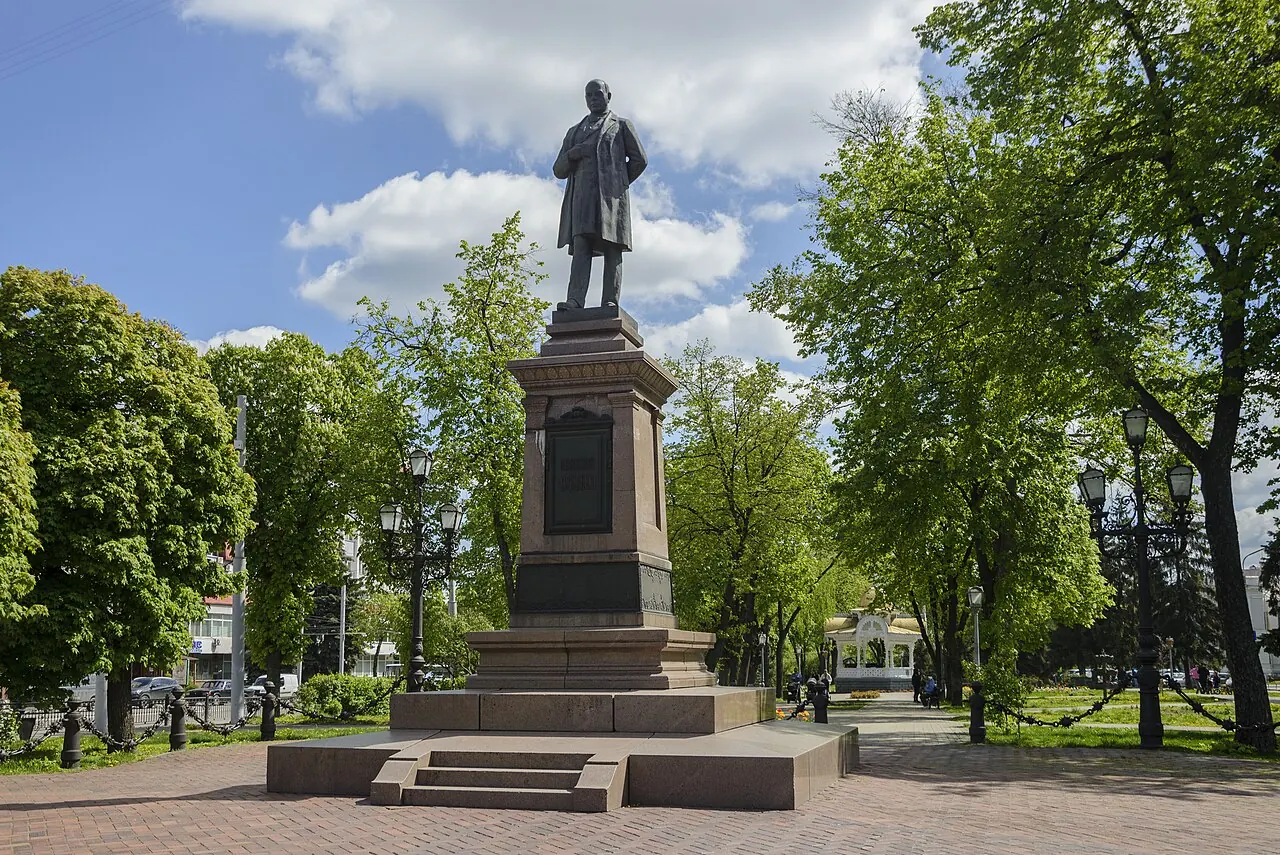
The Kharytonenkos were not only the richest people in town but the most generous. Ivan served as mayor and built hospitals and an almshouse; Pavlo built the cadet school and the Trinity Cathedral, modelled on St Isaac's in St Petersburg. The family owned close to half of what is now the city's historic architecture. Other sugar dynasties, the Sukhanovs and the Leshchynskyis, worked alongside them, and the city owes them its mansions, parks and the Altanka.
Late in the century Sumy modernised quickly. In January 1877 a railway station opened on the Vorozhba–Merefa line, and in 1896 Belgian investors founded the machine workshops that grew into the future Frunze plant. The cadet school opened in 1899. The population grew to 27,564 at the 1897 census and about 50,000 by 1913.


1917–1991
The twentieth century
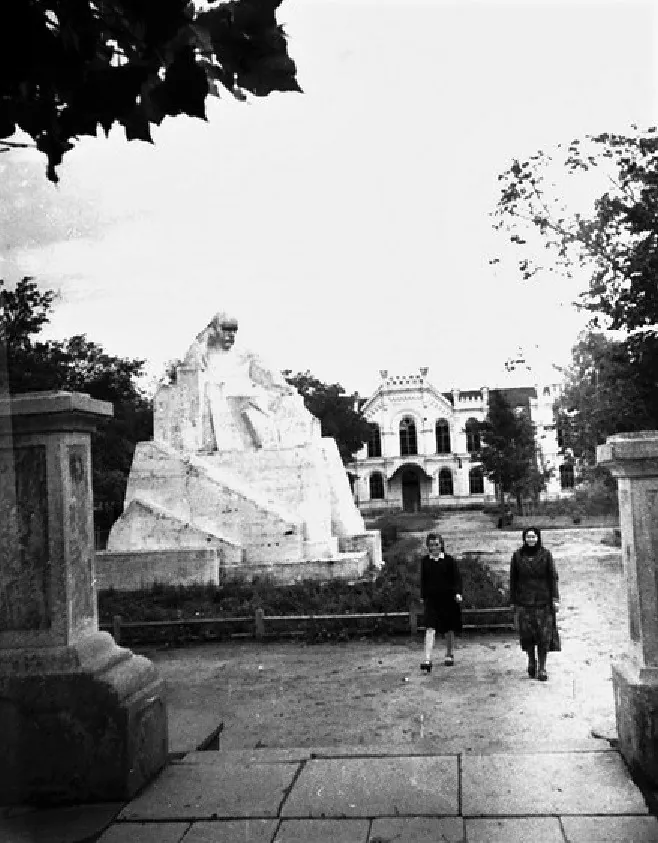
The revolution and Bolshevik rule broke old Sumy. The Kharytonenko monument on Pokrovska Square was destroyed and replaced with Lenin, cathedrals became warehouses, and the art museum's director Nykanor Onatsky was shot in 1937. In 1926 the city had 44,000 people, more than 80% of them Ukrainian. In the Holodomor of 1932–1933 about 5,000 people died in Sumy itself, and 59 villages of today's Sumy region were blacklisted.
On 10 January 1939 Sumy Oblast was created, with the city as its capital. German troops occupied Sumy on 10 October 1941; in February 1942 the Nazis murdered about a thousand Jews. The city was liberated on 2 September 1943 by divisions of the 38th Army. A photo of the celebrations by the Altanka went round the newspapers, and from then on it became the symbol of Sumy. In January 1944 the staff of the First Polish Army was formed here.
After the war Sumy became an industrial city. The Frunze machine plant (later Sumy NPO) expanded, Sumykhimprom started up in 1954 and in 1963 opened the USSR's first titanium dioxide workshop. In 1959 the electron microscope plant, later known as SELMI, began work. Under Anatolii Bondarenko, head of the city executive in 1968–1980, the city built a new bridge over the Psel, 11 schools and 29 kindergartens. The 1989 census counted 291,264 residents.
September 1943

1991–2021
Independence
On 15 February 1991, even before independence was declared, the city council restored the historic 1781 coat of arms. In 1993 the local institute became Sumy State University, and in 1996 a monument to Ivan Kharytonenko returned to Pokrovska Square. The churches came back too: the Resurrection Church and the Trinity and Transfiguration cathedrals reopened for worship.
Industry went through hard times after the 1990s: SELMI was declared bankrupt in 2017 and Sumy NPO ran up the country's biggest wage arrears. The city turned into a student and cultural town instead: the organ moved to the philharmonic, the Chekhov-Fest and Kharytonenko-Fest festivals appeared, and in 2010 a monument to the sugar cube went up on Pokrovska Square. The 2022 estimate put the population at 256,474.
The long-unfinished bridge over the Strilka
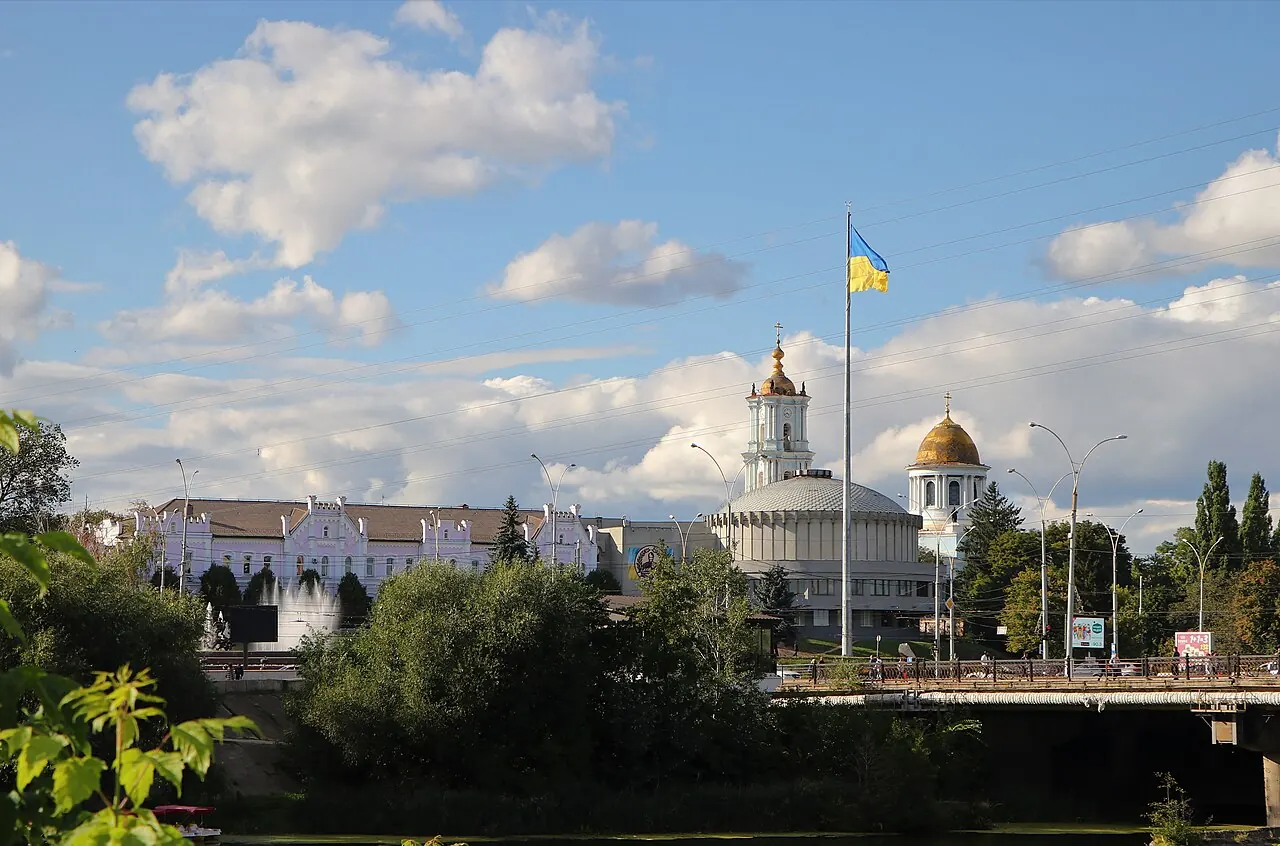
One of Sumy's best-known unfinished projects was the bridge over the wide ravine of the Strilka river, where 20 Rokiv Peremohy Street (now Sumskoi Artbryhady) meets Romenska Street. Construction began in 1988 to route traffic from the Romny highway to the Kharkiv highway around the centre, but in 1990, as Soviet funding collapsed, work stopped. For almost twenty years the concrete piers and spans stood abandoned. In summer 2009 Sumymostobud resumed work in three shifts with no days off, reinforcing the old columns and laying the roadway and sidewalks. On 2 November 2009 the bridge, 168 m long and almost 24 m wide, finally opened, becoming the second-longest in the city. The prime minister expected at the opening never came, and the state still owed the builders more than 8 million hryvnias. In 2019 the city council named it the Panteleimon Bridge, after St Panteleimon's church beside it.

2022–2026
The war
On 24 February 2022 fighting in Sumy began by early afternoon. On 25 February the city was surrounded. On the night of 8 March an airstrike killed 22 civilians. That same day about 5,000 people left through a humanitarian corridor via Lokhvytsia and Lubny. On 4 April the governor announced that Russians held no towns or villages in the oblast, and on 8 April their troops left Sumy Oblast entirely. The cadet school, whose grounds had seen fighting, moved to Khmelnytskyi.
On 6 August 2024 Ukrainian forces crossed from Sumy Oblast into Russia's Kursk region. In March 2025 the Russians retook Sudzha and began pushing on the Sumy borderlands. On 13 April 2025, Palm Sunday, two Iskander-M missiles hit the city centre, killing 35 people, including two children, and wounding 125. Ukraine has identified eight Russian officers responsible for the strike.
More on the defence of the city and life today on the war page.
By the end of February 2026, shelling had killed 578 civilians in Sumy Oblast, 29 of them children. The front line runs about 18–20 km from the city, and 78 settlements in the oblast are under compulsory evacuation. The strikes continue into autumn 2026. Sumy lives on, and every replaced window and every play staged in a shelter is part of this history.
Timeline
Key dates
The Cossack era
First settlers?
According to Bahalii and Hrushevsky, the year the settlement was founded.
Kondratiev's petition
On 24 June the Cossacks ask permission to settle; it is granted on 26 June. The official founding date.
Town and fortress
On 1 July the settlement is declared a town and the oak fortress is begun.
The Sumy Regiment
The regiment takes final shape with Kondratiev as first colonel.
Crimean campaign
Sumy is the assembly point for the Crimean campaign.
Resurrection Church
The city's first stone building is consecrated.
The great fire
About 250 houses and two fortress towers burn down.
Peter I's headquarters
The tsar winters in Sumy before the Battle of Poltava.
End of the Cossack order
The regiment becomes the Sumy Hussar Regiment.
The imperial era
Coat of arms
On 21 September the three-bag coat of arms is approved.
Fortress dismantled
The defences are no longer needed.
First theatre
Sumy gets its first theatre.
The Pavlivka works
Kharytonenko opens his sugar refinery.
The railway
A station opens on the Vorozhba–Merefa line.
Machine works
Belgian investors found the future Frunze plant.
The cadet school
The Kharytonenkos' cadet school opens.
The Altanka
The future city symbol goes up over a former oil well.
Trinity Cathedral
The cathedral is completed, but its consecration is called off after Pavlo Kharytonenko's death and the war.
The 20th century
The Holodomor
About 5,000 people die in Sumy.
Regional capital
Sumy Oblast is created on 10 January.
Occupation
German troops enter the city on 10 October.
Liberation
The city is liberated on 2 September.
Sumykhimprom
The chemical plant's first workshop starts up.
Chekhov Museum
The house museum opens in Luka.
Independent Ukraine
Arms restored
The 1781 arms are restored on 15 February.
Sumy State University
The institute becomes a state university.
Kharytonenko monument
The patron returns to Pokrovska Square.
Defence of Sumy
The city holds out under encirclement; Sumy Oblast is liberated on 8 April.
Palm Sunday
On 13 April a missile strike kills 35 people.
Hero City
On 30 September Decree No. 720/2025 names Sumy a Hero City of Ukraine.
Demographics
How many people lived in Sumy
| Year | Population | Source |
|---|---|---|
| 1660 | ≈ 2 700 | estimate |
| 1732 | ≈ 7 700 | estimate |
| 1850 | 10 300 | estimate |
| 1897 | 27 564 | census |
| 1913 | ≈ 50 400 | estimate |
| 1926 | 44 000 | census |
| 1939 | 63 976 | census |
| 1989 | 291 264 | census |
| 2001 | 293 141 | census |
| 2022 | 256 474 | official estimate |
Because of the war there are no reliable population figures after 2022.
Sources
What we read
- Encyclopedia of Ukraine — Sumy
- Encyclopedia of Ukraine — Sumy regiment
- history.sumy.ua — Рік заснування 1652-й
- history.sumy.ua — Герб Сум
- Цукр — Сумська фортеця
- Радіо Свобода — слобідські полки
- ДАСО — фонд Харитоненків
- Суспільне — Голодомор на Сумщині
- Human Rights Watch — Sumy 2022
- Тексти — удар 13 квітня 2025
- Радіо Свобода — Суми, 4 роки війни