Sumy

Home / Sights

Sights

What to see in Sumy

More than fifty places, from the oldest stone building of 1702 to a monument to sugar, from "Alyosha" to the Kharytonenko necropolis. For each one: who built it, what makes it interesting and what state it is in now.

Sumy is a frontline city about 30 km from the Russian border. Many landmarks are damaged, some museums are closed and their collections evacuated. Before any trip, check official updates from the Sumy regional military administration and city council.

City landmarks

Resurrection Cathedral, Sumy
Photo: Olga Loboda 0806, CC BY-SA 4.0
Church

Resurrection Cathedral

1696–1702 · 19 Nezalezhnosti Sq.

The oldest stone building in Sumy and a Cossack Baroque monument of national importance. Herasym Kondratiev himself began it and his son Andrii finished it, as both church and family burial vault.

  • Two storeys: the Resurrection church above, St Andrew's below.
  • The central dome is about 35 m high.
  • It burned in 1791 and was a warehouse in Soviet times; in 1966 it was due for demolition but was saved and given to a museum.
  • Its present look dates from the 1978 restoration. Since 2019 it has been a cathedral of the Orthodox Church of Ukraine.

Hit by a drone during a service on 11 September 2025 and again on 26 July 2026. Services continue.

Transfiguration Cathedral, Sumy
Photo: Андрій Мозговий, CC BY-SA 4.0
Church

Transfiguration Cathedral

1776–1788, 1882–1892 · 31 Soborna St.

The tallest landmark of the centre. Wooden churches stood here from the 1650s and burned three times. The cathedral got its present look from the Kharkiv architect Mykhailo Lovtsov, paid for by the Sukhanov sugar family.

  • The 56 m bell tower is the city's tallest religious building; the English chiming clock was installed in 1884.
  • Its cast-iron evangelists, about 3 m tall, were made at Sumy's Vulkan foundry.
  • A white marble and malachite iconostasis and paintings by Volodymyr Makovsky.
Holy Trinity Cathedral, Sumy
Photo: Андрій Мозговий, CC BY-SA 4.0
Church

Holy Trinity Cathedral

1901–1914 · 24A Troitska St.

Pavlo Kharytonenko's gift to the city, conceived as a smaller version of St Isaac's Cathedral. Karl Scholz's design was finished by his son Gustav; Oleksii Shchusev created the interior and mosaic floor.

  • Mikhail Nesterov painted the icons, Kuzma Petrov-Vodkin the Trinity stained glass and Ignatii Nivinsky the murals.
  • The consecration was set for 26 September 1914 but cancelled after the patron's death and the outbreak of war.
  • From 1987 to 2001 it served as an organ hall, and the lower level holds a gallery of Kavaleridze sculptures.
St Elijah Church, Sumy
Photo: Андрій Мозговий, CC BY-SA 4.0
Church

St Elijah Church

consecrated 1851 · Illinska St.

A classicist church that replaced two wooden ones lost to fire; the great fire of 1839 is what pushed the parish to build in stone.

  • Construction ran from 1836/1844 to 1851.
  • A chapel of St Tikhon was added in 1995.
  • Opposite is the Sumy-Kyiv Divisions square.
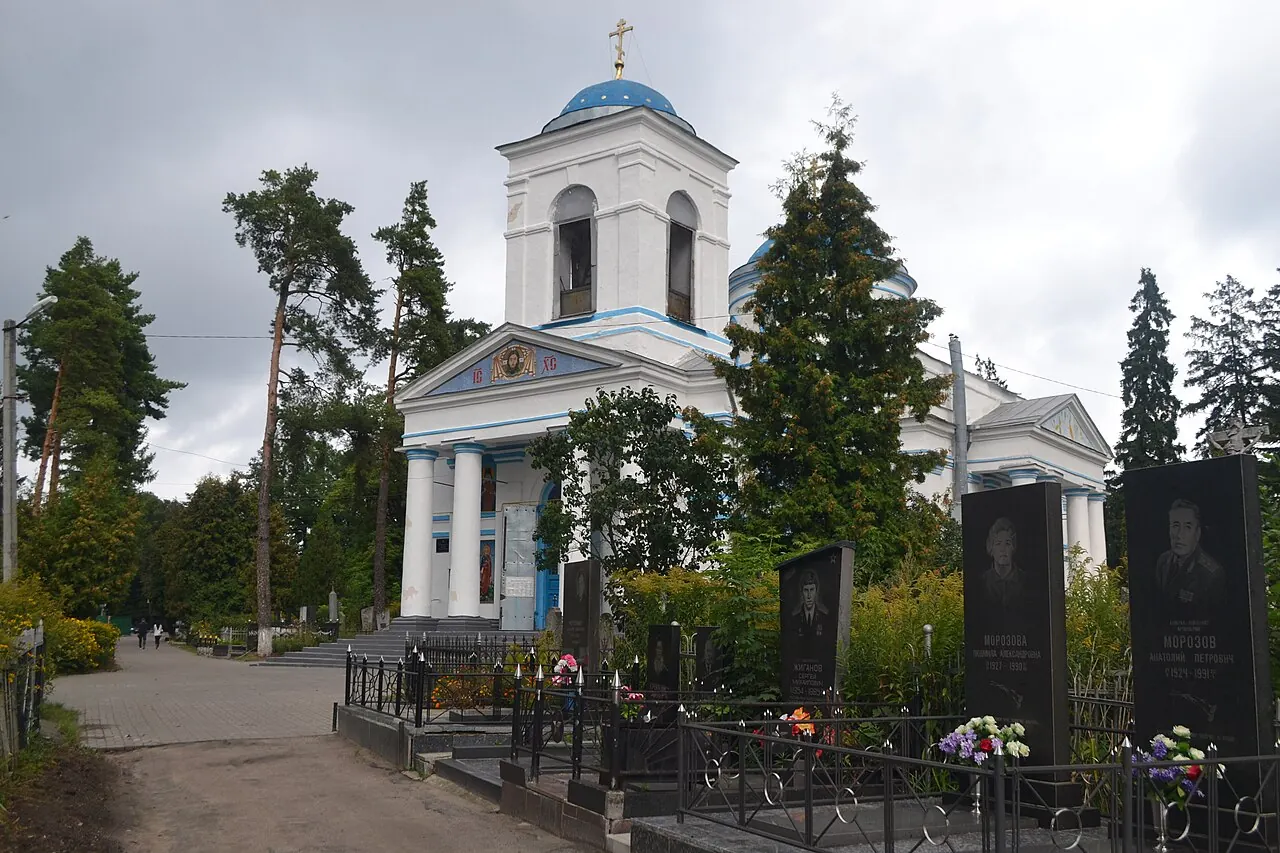
Sts Peter & Paul Church and the Kharytonenko tomb, Sumy
Photo: Olga Loboda 0806, CC BY-SA 4.0
Church

Sts Peter & Paul Church and the Kharytonenko tomb

1851 · Central Cemetery

A late-classicist church on the site of the almshouse built by Ivan Kharytonenko, with the Kharytonenko and Sukhanov family graves beside it.

  • The "Angel" and "Golgotha" in white Italian marble are by the Frenchman Aristide Croisy.
  • There is also an 8 m pyramid crypt and the Sukhanov graves (1910).
  • Since 2014 the cemetery has an Alley of Glory for fallen defenders.

Guided bombs blew out the church windows on 23 September 2026.

St Panteleimon Church, Sumy
Photo: Олексй Гайденко (Користувач:О. Погодін), CC BY 3.0
Church

St Panteleimon Church

1911 · 1 Romenska St.

Part of a former monastery ensemble whose main patron was the merchant Kuleshov. It is attributed to either Shchusev or Pokrovsky.

  • Services ran until 1963; from 1980 it housed a planetarium.
  • It was returned to the church in 1990 and now houses a seminary.
Panteleimon Bridge, Sumy
Map: © OpenStreetMap contributors, ODbL

There is no freely licensed photo of the bridge yet, so here it is on the map: it carries Sumskoi Artbryhady Street over the Strilka valley, next to St Panteleimon church.

Architecture

Panteleimon Bridge

1988–2009 · Romenska / Sumskoi Artbryhady St.

A bridge over the Strilka ravine begun in 1988 and abandoned in 1990. It stood unfinished for almost twenty years until it finally opened on 2 November 2009.

  • 168 m long, the second-longest bridge in Sumy; a 23.9 m carriageway and two 3.3 m sidewalks.
  • It was meant to carry traffic from the Romny highway to the Kharkiv highway around the centre.
  • It was named in 2019 after the neighbouring St Panteleimon church.
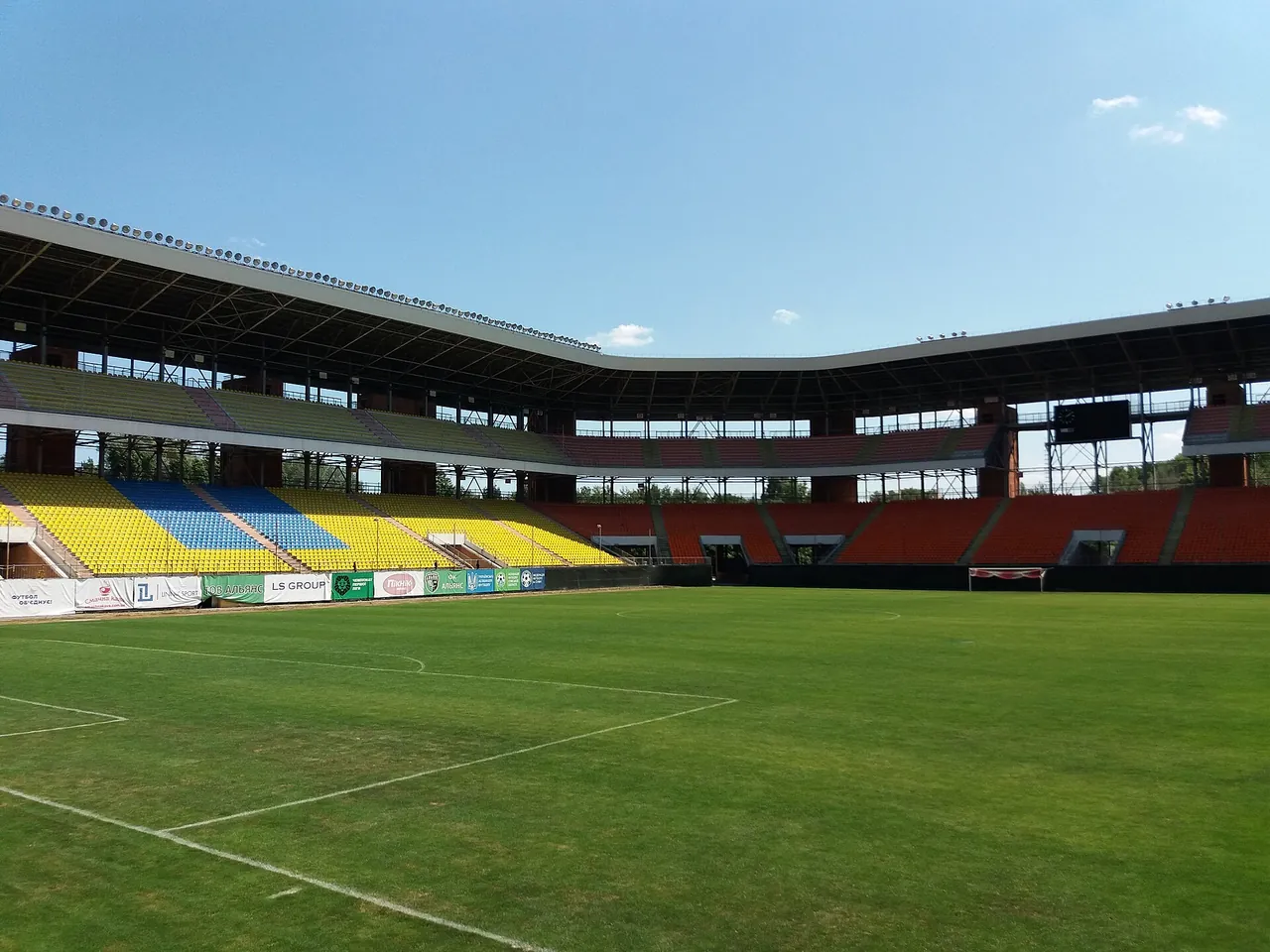
Yuvileinyi Stadium, Sumy
Photo: Oleh Kushch, CC BY-SA 4.0

Yuvileinyi Stadium in summer 2021.

Stadium

Yuvileinyi Stadium

1999–2001 · Kozhedub Park · 25,830 seats

The main football ground of Sumy and the seventh largest in Ukraine. It stands on the site of the 1949 Spartak Stadium, demolished in the late 1980s for a planned 35,000-seat arena. Work on the new one began on 2 September 1999 and it opened on 20 September 2001, holding about 28,000 at first; standing areas were later fitted with seats.

  • Attendance record: about 29,300 for Spartak Sumy vs Naftovyk Okhtyrka in 2003.
  • It hosted the 2009 Ukrainian Super Cup (Dynamo v Vorskla) and the Ukrainian Cup final on 25 May 2011 (Dynamo v Shakhtar, 27,800 spectators).
  • Home to Spartak, PFC Sumy, Alians and, since 2023, Viktoriya.
  • In December 2020 it was sold at auction for UAH 8.12 million to pay Sumy NPO's wage debts. Prosecutors valued it at UAH 395 million, and in 2021 a court froze it.
Catholic Church of the Annunciation, Sumy
Photo: Андрій Мозговий, CC BY-SA 4.0
Church

Catholic Church of the Annunciation

1901–1911 · 6 Troitska St.

A red-brick Gothic Revival church for the foreign specialists of the sugar mills, on land given by the Orthodox Pavlo Kharytonenko.

  • In Soviet times it was a museum, then a school gym.
  • Returned to worship in 1994 and reconsecrated in 1998.
The Altanka, Sumy
Photo: Андрій Мозговий, CC BY-SA 4.0
City symbol

The Altanka

1900–1905 · Pokrovska Sq. · ⌀ 6 m, 10 m

A carved octagonal wooden gazebo by zemstvo draughtsman Matvii Shchavelov, and the symbol of Sumy. The merchant Yosyp Leshchynskyi built it over a well that had been drilled for oil and found nothing.

  • The well was sealed with a steel plate under a brick base.
  • Legend says it was built without a single nail, though this is unconfirmed.
  • It is said to be the only wooden building in Sumy to survive WWII unharmed. It became the city symbol after a photo of the 1943 liberation celebrations.
  • Inside there is a street piano anyone can play.
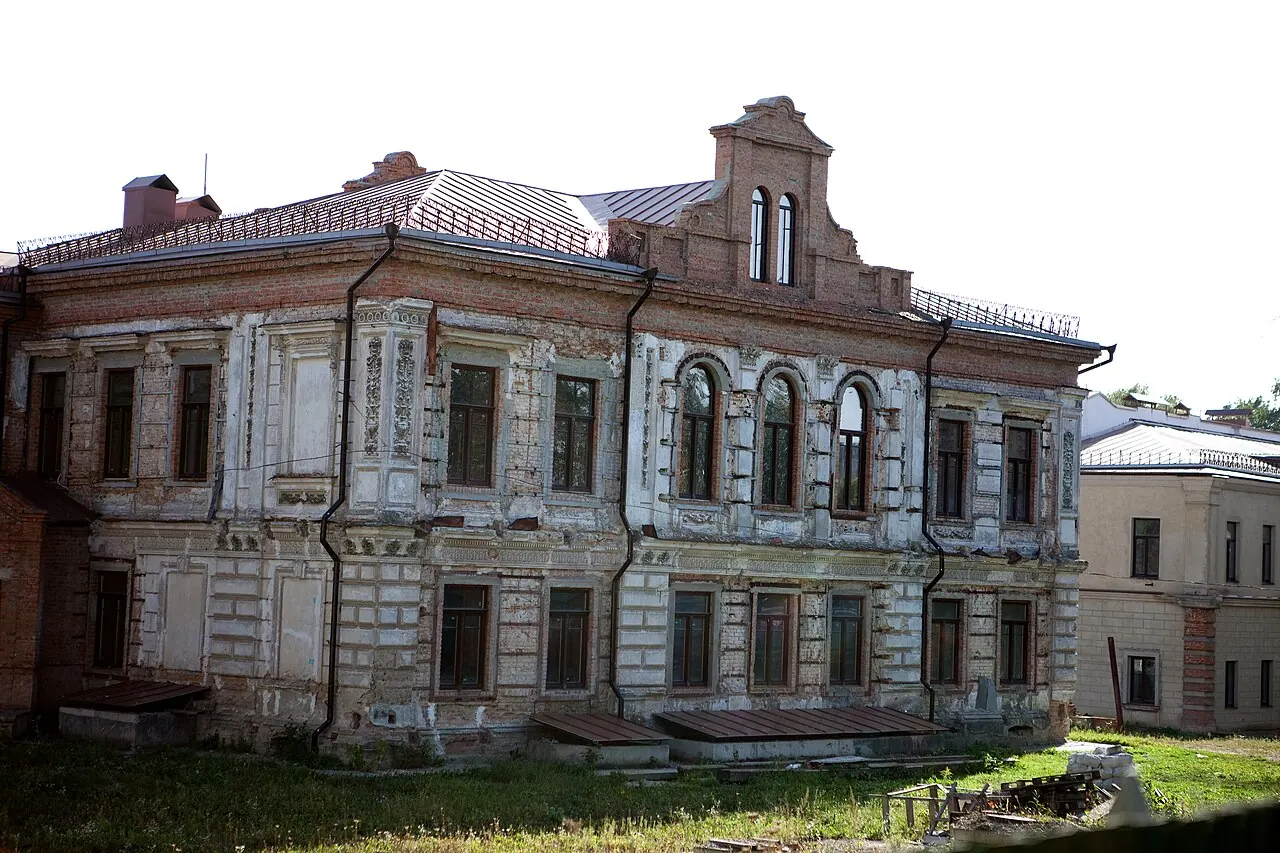
Kharytonenko Estate, Sumy
Photo: Андрій Ямщинський, CC BY-SA 4.0
Architecture

Kharytonenko Estate

1890–1911 · 4 Troitska St.

The family seat of the sugar dynasty. The main house dates from 1890–1891 and the office building from 1911. Later it housed the Banking Academy and Sumy State University.

  • Since 2021 the Hlukhiv reserve has looked after the estate.
  • Restoration is estimated at more than 120 million hryvnias.

In poor condition; restoration has not begun.

Sukhanov-Sumovsky Estate, Sumy
Photo: Андрій Мозговий, CC BY-SA 4.0
Architecture

Sukhanov-Sumovsky Estate

1895 · 56–58 Petropavlivska St.

The mansion of sugar manufacturer Mykhailo Sukhanov. After his bankruptcy and death in 1909 it passed to the Sumovsky family. Since 1991 it has housed the Institute of Applied Physics.

  • The original staircase, stucco and chandeliers survive.

Badly damaged by a missile on 13 April 2025; the building has been 3D-scanned.

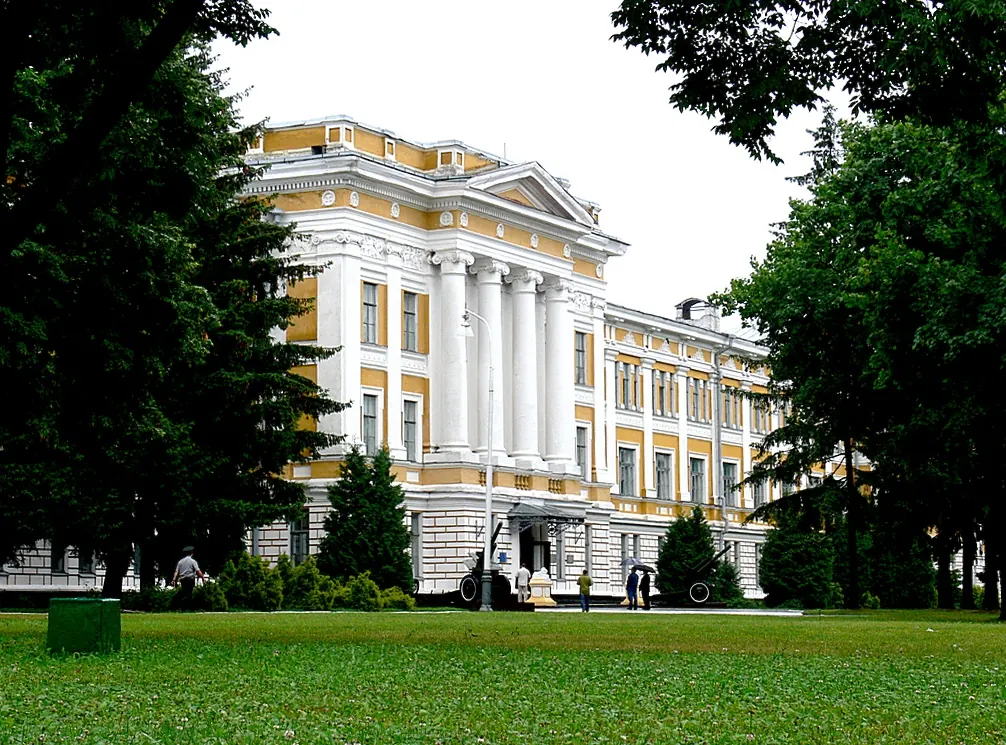
Sumy Cadet Corps, Sumy
Photo: Svaku, CC BY-SA 3.0
Architecture

Sumy Cadet Corps

1899 · Herasyma Kondratieva St.

The complex was built with money left by Ivan Kharytonenko and completed by his son Pavlo. The imperial cadet corps ran until 1918; in Soviet times it was an artillery school.

  • Today's lyceum bears Ivan Kharytonenko's name and belongs to the Border Guard Service.
  • In 2022 the lyceum moved to Khmelnytskyi.

Partly destroyed by a guided bomb.

Philharmonic (Nobility Assembly), Sumy
Photo: Андрій Мозговий, CC BY-SA 4.0
Architecture · concerts

Philharmonic (Nobility Assembly)

1890–1891 · 63 Petropavlivska St.

Built as the Nobility Assembly, a cinema from 1916 and the 370-seat philharmonic since 1939. It houses one of Ukraine's finest organs.

  • A Rieger-Kloss organ, opus 3568, built in 1986 in Krnov, Czech Republic: 48 stops, three manuals and a 32-foot pedal stop.
  • Until 2007 the instrument stood in the Trinity Cathedral.

Windows blown out on 13 April 2025; organist Olena Kohut was killed.

Shchepkin National Theatre, Sumy
Photo: Prudon, CC BY-SA 3.0
Theatre

Shchepkin National Theatre

1980 · 1 Teatralna Sq.

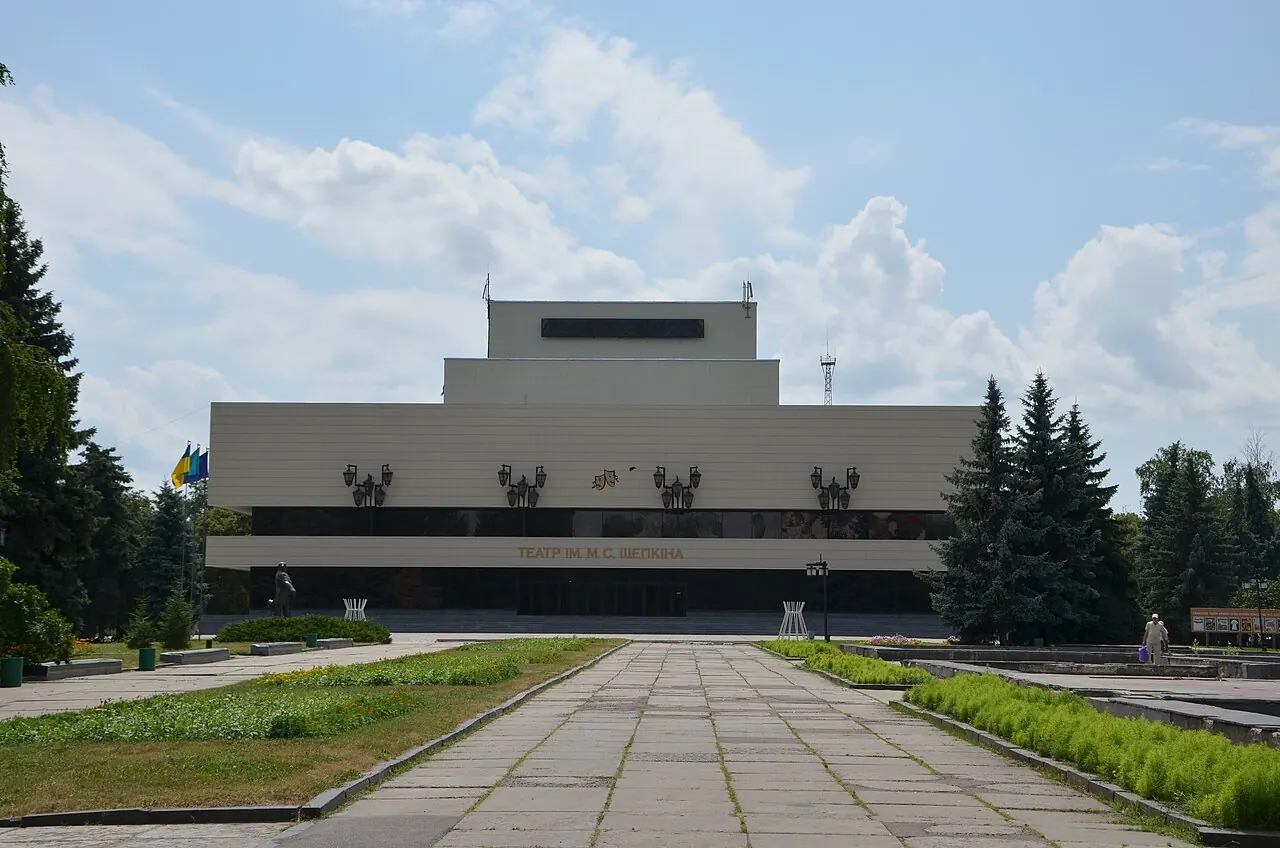
The national academic theatre of drama and musical comedy. The company was founded in Lubny in 1933, has been in Sumy since 1939, and moved into its present building in 1980.

  • Academic status in 2012, national status on 8 September 2020.
  • A monument to Mykhailo Shchepkin (1989) stands on the square.

Damaged on 13 April 2025; performances run with safety restrictions.

Korepanov Theatre, Sumy
Photo: Olga Loboda 0806, CC BY-SA 4.0
Theatre

Korepanov Theatre

1909–1912 · 6 Pokrovska St.

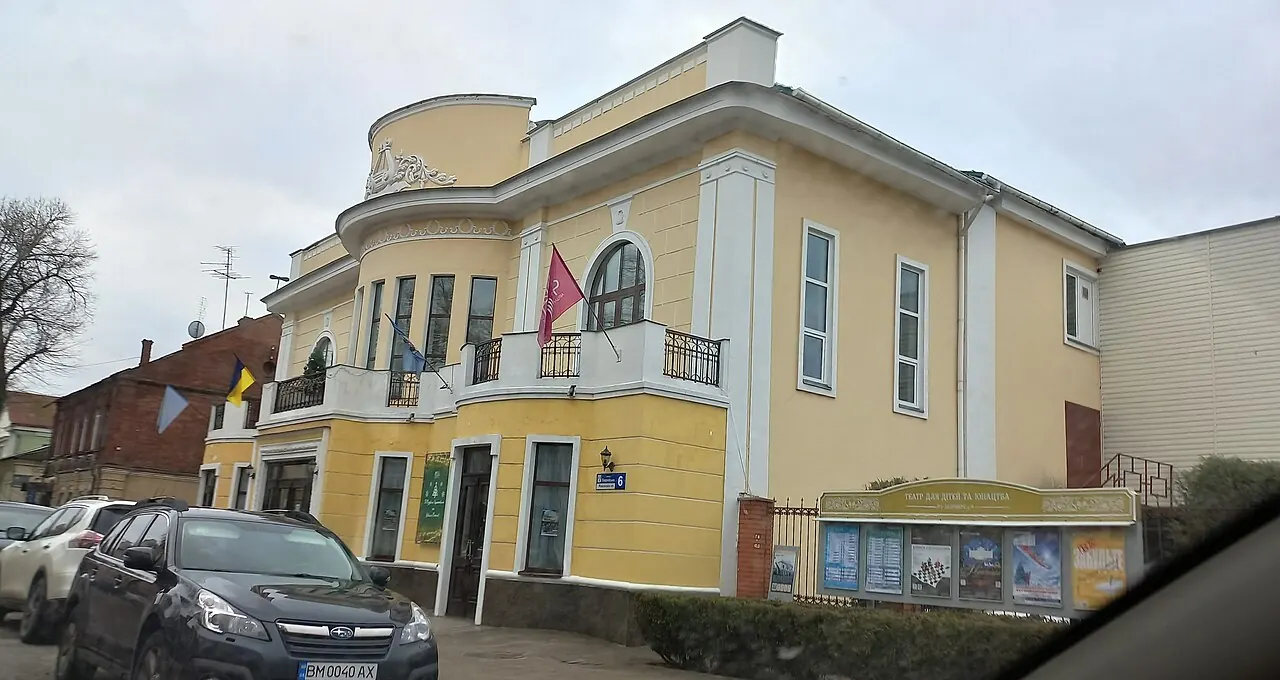
Built by city councillor and amateur actor Dmytro Korepanov. The Shchepkin company played here from 1939 to 1980; now it is the children's and youth theatre.

Windows blown out on 13 April 2025; the theatre is closed.

Sumy State University and the old district court, Sumy
Photo: Oleksandr Samoylyk, CC BY-SA 3.0
Architecture

Sumy State University and the old district court

1914–1917 · 57 Petropavlivska St.

The district court building by Karl Scholz now belongs to the university, which grew out of a 1948 training centre at the Frunze plant.

  • The university's main building is at 2 Rymskoho-Korsakova St.

Hit on 3 September 2024, 13 April 2025 and 18 August 2025: the congress centre and a wall of the court building were destroyed and about 60,000 books lost.

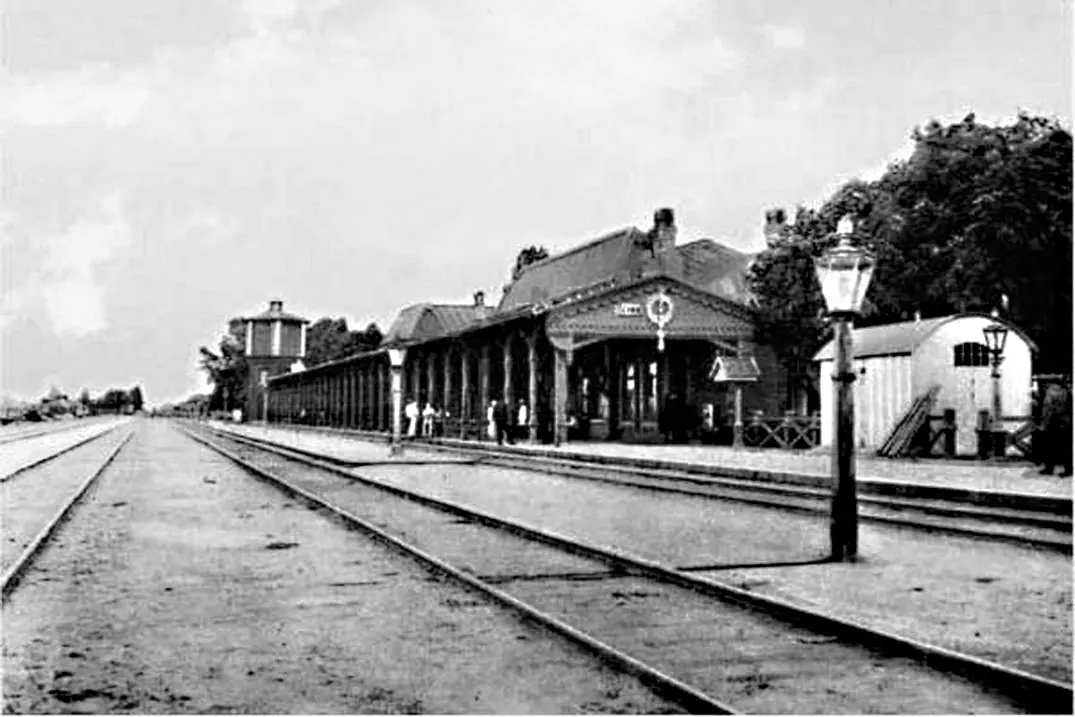
Railway station, Sumy
Photo: Unknown photographer, Public domain
Architecture

Railway station

1877

A station on the Vorozhba–Merefa line, opened in January 1877. The railway gave the sugar mills access to the markets of the empire.

Damaged several times; trains currently terminate at Konotop.

Onatsky Art Museum, Sumy
Photo: Сумський художній музей ім. Н. Онацького, CC BY-SA 4.0
Museum

Onatsky Art Museum

1920 · 1 Pokrovska Sq.

The museum in the former State Bank building was founded by the painter Nykanor Onatsky, who was shot in 1937. The collection has more than 11,000 works.

  • Shevchenko, Borovikovsky, Kuindzhi, Aivazovsky, Repin, Pymonenko, Prymachenko and Italian painters of the 17th–19th centuries.
  • It split from the local-history museum in 1939.

Roof damaged in 2023, windows on 13 April 2025. Open with restrictions; part of the collection has been evacuated.

Regional Museum ("House with Caryatids"), Sumy
Photo: Yur4ik, CC BY-SA 4.0
Museum

Regional Museum ("House with Caryatids")

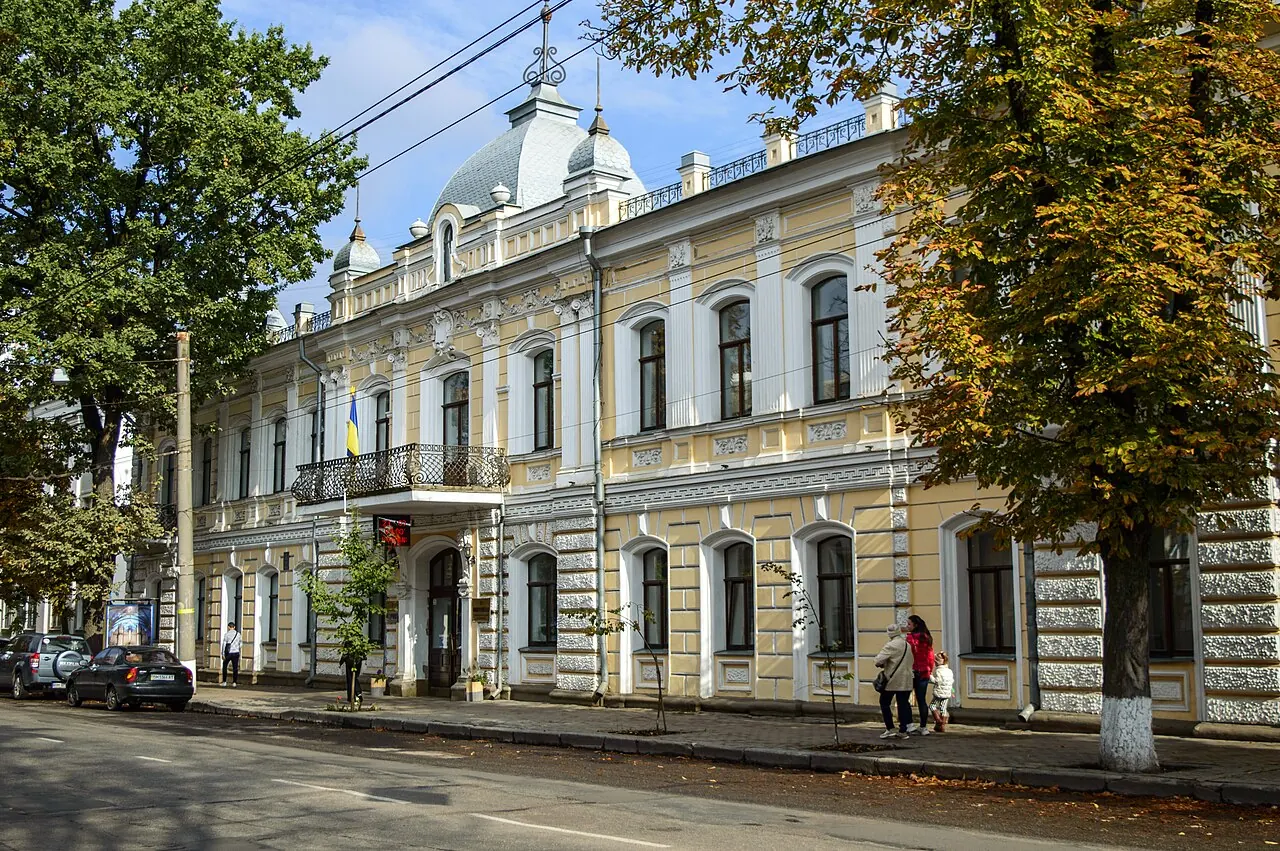
1885–1886 · 2 Herasyma Kondratieva St.

The former zemstvo administration, with a corner balcony on atlantes and caryatids beneath a domed tower. The museum was founded in 1920 and has been in this building since 1972.

  • About 45,000 items.
  • Its branches include the Chekhov museum and the Tchaikovsky museum in Nyzy.
  • It now keeps the evacuated collection of the Chekhov museum.

Windows broken on 13 April 2025.

Chekhov House Museum, Luka, Sumy
Photo: Андрій Мозговий, CC BY-SA 4.0
Museum

Chekhov House Museum, Luka

1960 · 79 Chekhova St.

The wing of the Lintvaryov estate where Anton Chekhov spent the summers of 1888 and 1889. Here he wrote The Wood Demon, fished in the Psel and said goodbye to his brother.

  • The writer's brother, the painter Nikolai Chekhov, died here in 1889 and is buried in Luka.
  • Three of the estate's seven buildings survive.
  • Nearby is the 1837 St John the Baptist church, on the site of a convent founded by Kondratiev.

Closed for the war; Chekhov's belongings have been moved to the regional museum.

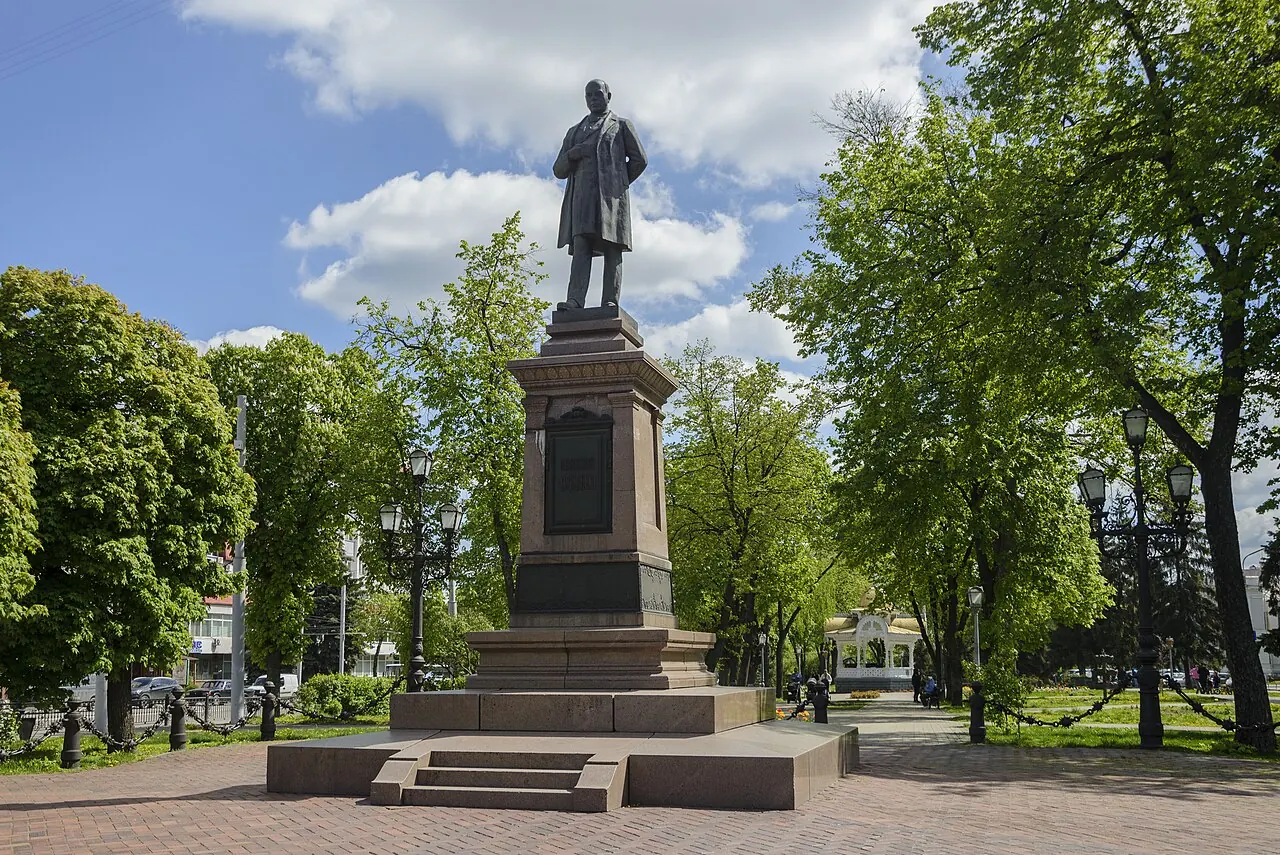
Ivan Kharytonenko Monument, Sumy
Photo: Андрій Мозговий, CC BY-SA 4.0
Monument

Ivan Kharytonenko Monument

1899 / 1996 · Pokrovska Sq.

The first monument to the patron, by Opekushin and Croisy, was unveiled in 1899. The Bolsheviks destroyed it and put up Lenin instead. The present monument dates from 1996.

  • It is ringed by cast-iron lanterns joined by chains, their bases bearing the three-bag coat of arms.
Sugar Cube Monument, Sumy
Photo: Віктор Полянко, CC BY-SA 3.0

Pictured: the ruins of the Kharytonenkos' Pavlivka refinery, which the monument commemorates.

Monument

Sugar Cube Monument

2010 · Pokrovska Sq.

A "sugar cube" of Crimean limestone, put up for the city's 355th anniversary opposite the Kharytonenko monument. Sculptors O. Shevchenko and V. Dovhaliuk.

  • The limestone darkens like old sugar, and rust from a metal cube is a reminder of the lost sugar industry.
The "Sumka" Sign, Sumy
Photo: Віктор Полянко, CC BY-SA 4.0

Pictured: the Sumka river by the Resurrection Church; the sign stands nearby on Voskresenska Street.

Monument

The "Sumka" Sign

2008 · 19 Voskresenska St.

A bag above a well, illustrating the legend of the Cossacks who found bags of gold by the Psel. Unveiled on 18 May 2008.

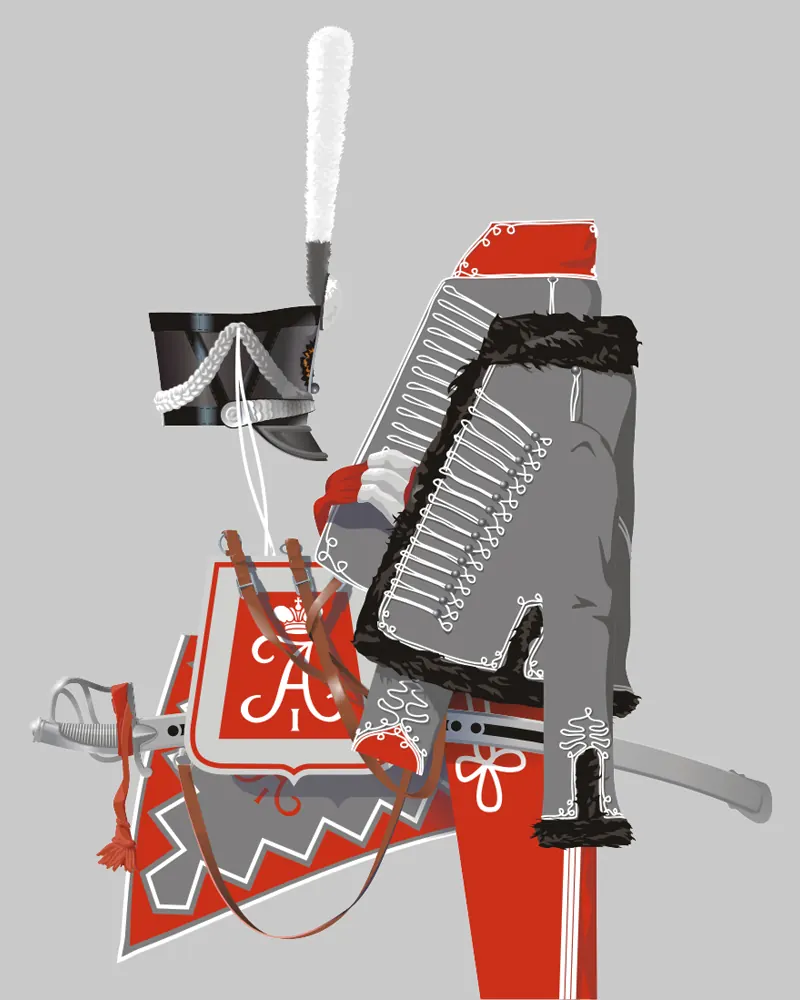
Hussar Monument, Sumy
Photo: Andrei Pilipenko, CC BY-SA 3.0

Pictured: the full-dress uniform of the Sumy Hussar Regiment in 1812.

Monument

Hussar Monument

2011 · 4 9 Travnia Ln.

A 178 cm bronze hussar honouring the Sumy and Okhtyrka hussar regiments that grew out of the Cossack ones. Sculptor B. Liuklian.

WWII memorials, Sumy
Photo: LomakaVictory, CC BY-SA 4.0

Pictured: the WWII memorial plot at Luka cemetery.

Memorial

WWII memorials

1967–1975

The best known is the "Unknown Soldier" of 1975, a bronze figure on an 18 m granite pylon. At the Central Cemetery the "Motherland" (1970) stands over a mass grave.

  • The city was liberated on 2 September 1943.
Pokrovska Square, Sumy
Photo: Mic140, CC BY-SA 3.0
Square & park

Pokrovska Square

historic centre

The heart of old Sumy. The Pokrovska church once stood in the middle until the Soviets demolished it. Now it holds the Altanka, the Kharytonenko and sugar monuments, the art museum and the "Cheerful Sumy Resident" sculpture (2012).

  • In the 1950s it was called Bazarna (Market) Square.
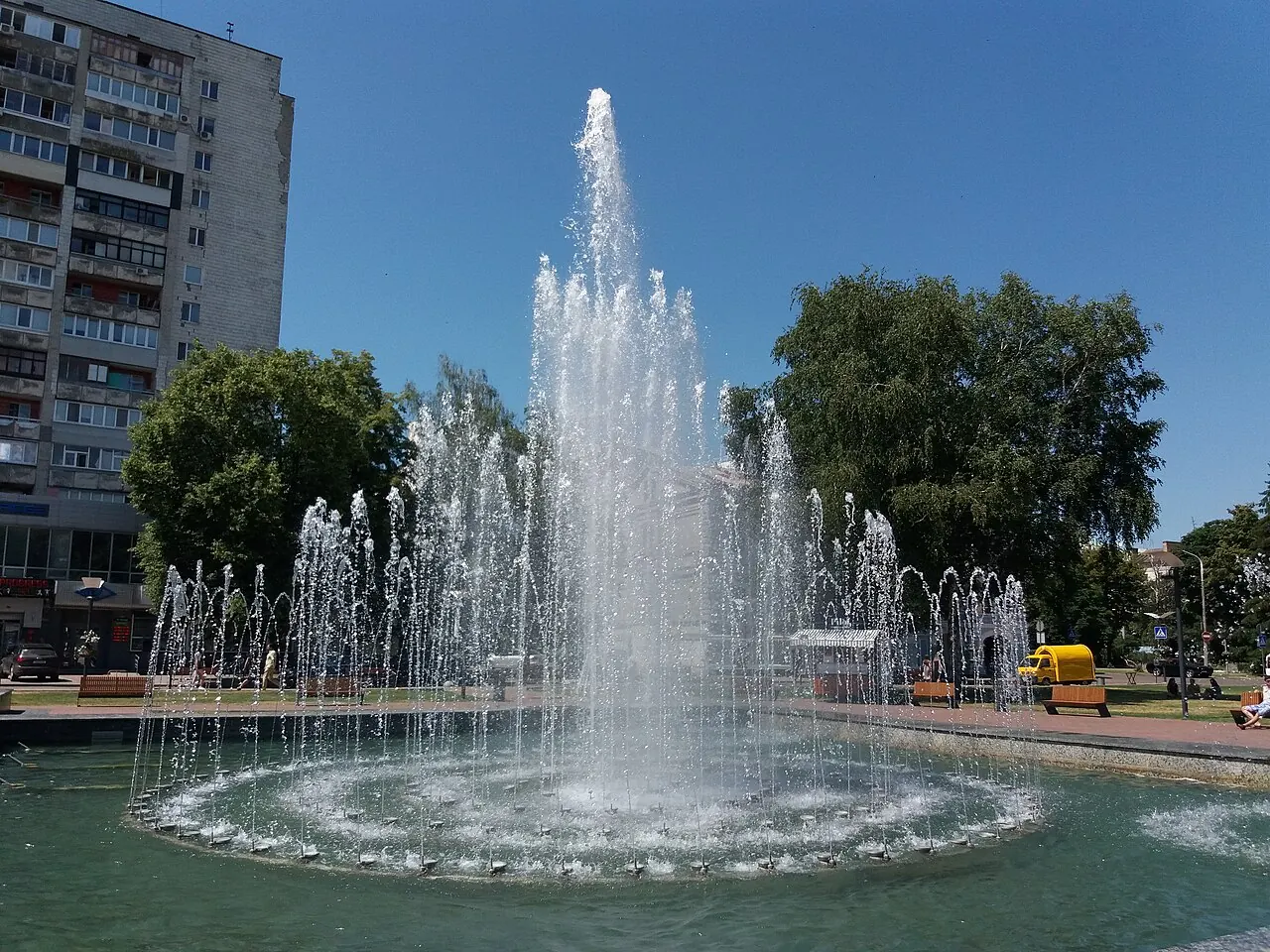
  • A ground-level fountain was added in 2012.
Soborna Street and the Sadko fountain, Sumy
Photo: Oleh Kushch, CC BY-SA 4.0
Square & park

Soborna Street and the Sadko fountain

fountain 1985 / 2010 · 39 Soborna St.

The main pedestrian street, with the old city hall (No. 33), the commercial bank (No. 37) and the girls' gymnasium (No. 39). Sadko is the city's main fountain, refaced in red granite in 2010.

  • Nearby is Shevchenko Square with its 1957 monument, on the site of the old citadel.
Teatralna Square, Sumy
Photo: Oleh Kushch, CC BY-SA 4.0
Square & park

Teatralna Square

rebuilt 2020

The square in front of the Shchepkin Theatre, rebuilt in 2020 with new fountains. In the evenings street musicians play here.

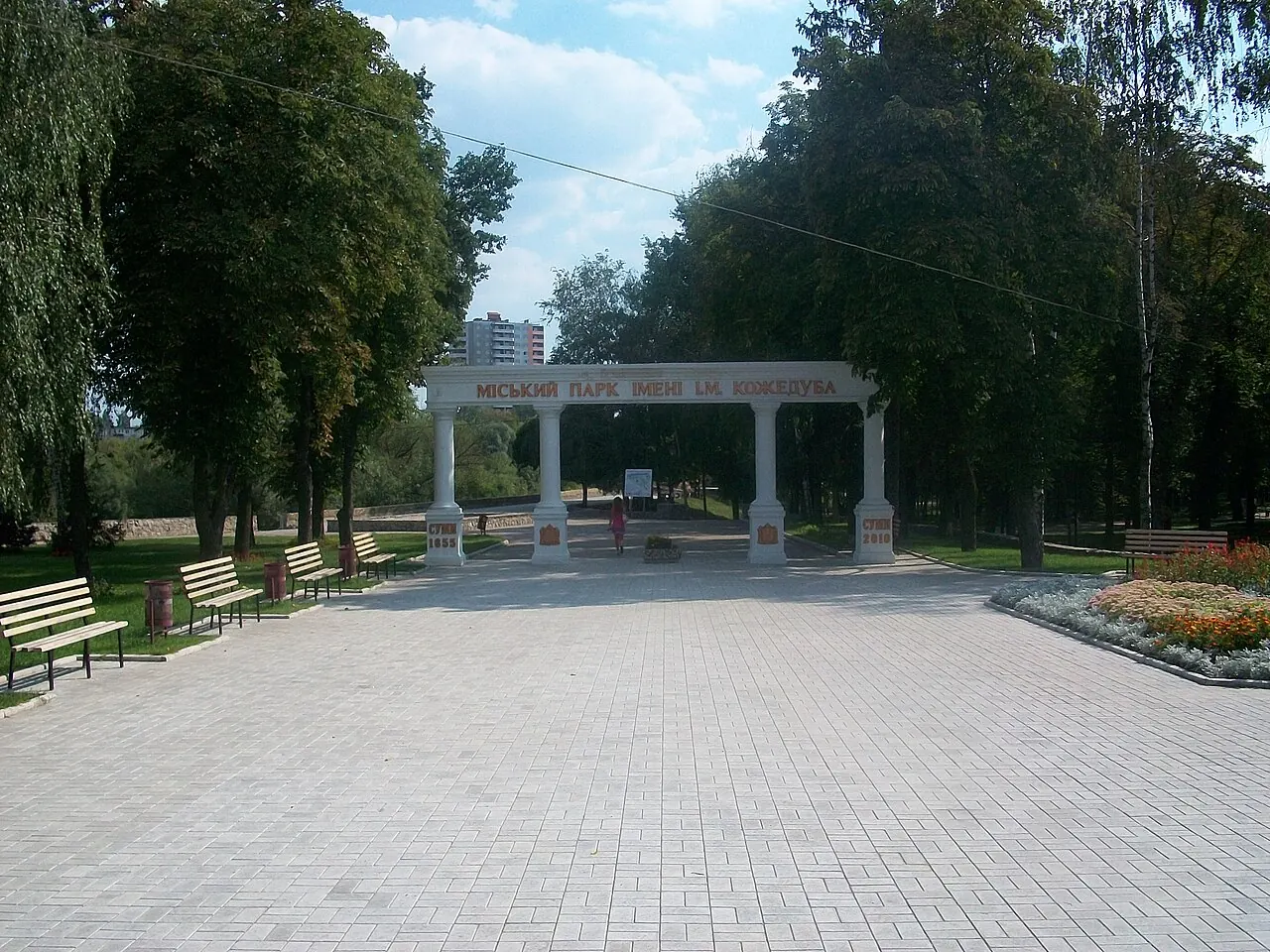
Kozhedub City Park, Sumy
Photo: Сіверян, CC BY-SA 3.0
Square & park

Kozhedub City Park

58 ha · 13 Haharina St.

The biggest park in Sumy, on former Leshchynskyi land given to the city in 1905. It runs along the Psel and you enter through a colonnade.

  • A bronze Chekhov sits on a bench here (2013).
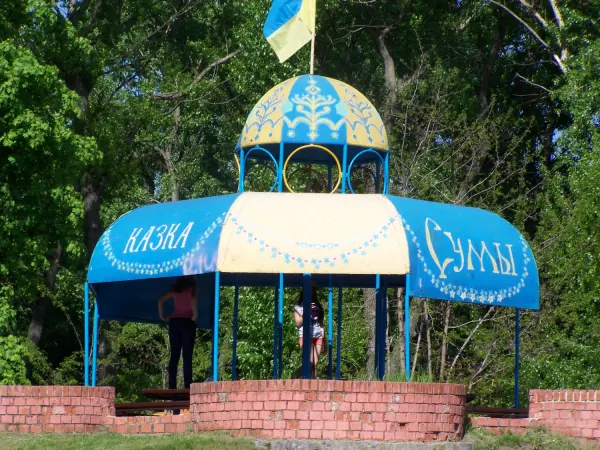
Kazka Children's Park, Sumy
Photo: Erslee, CC BY-SA 3.0
Square & park

Kazka Children's Park

1985 · Shevchenka Ave.

The favourite park of Sumy children, with fairy-tale figures and a fountain more than 10 m tall.

An unsafe castle structure is being dismantled; the rest of the park is open.

Pedagogical University Botanical Garden, Sumy
Photo: Департамен захисту довкілля Суми, CC BY-SA 4.0
Square & park

Pedagogical University Botanical Garden

1934 · 4.76 ha

A botanical garden of local importance with more than 1,100 plant species. Lemons, bananas and figs grow in the greenhouse.

  • Tours on weekdays by appointment.

Monuments

Monuments and memorials

From Soviet memorials to the Heavenly Hundred monument and the sweet-tooth sculptures: who made each one, when it went up and what state it is in now.

"Alyosha" and the Eternal Glory memorial, Sumy
Photo: Віктор Полянко, CC BY-SA 4.0

The "Unknown Soldier" the city calls "Alyosha".

Monument

"Alyosha" and the Eternal Glory memorial

1975 · Herasyma Kondratieva St.

A bronze soldier with shield and sword on a tall granite pylon, the centrepiece of the Eternal Glory memorial opened in 1975 for the 30th anniversary of victory on one of the highest points in the city. Officially he is the "Unknown Soldier"; locals nicknamed him "Alyosha" after the famous monument in Plovdiv, Bulgaria.

  • Around it: a semicircle of granite slabs with the names of fallen Sumy residents, the Eternal Flame, a T-34-85 tank and a 1938 howitzer moved here from the artillery school.
  • Sources give the pylon's height variously, from 18 to over 30 metres.
  • The city marks its liberation day, 2 September, here every year. Local heritage site No. 1295-Sm.
Glory to the Heroes of Sumy Oblast, Sumy
Photo: IhorSP, CC BY-SA 3.0

The monument's 22-metre stele.

Monument

Glory to the Heroes of Sumy Oblast

1967 · Pryvokzalna Sq.

A 6-by-18-metre multi-figure metal composition and a 22-metre stele in front of the station, put up to mark the award of the Order of Lenin to Sumy Oblast for its partisan movement. Sculptor B. Nikonchuk, architects S. Tutuchenko and A. Deineka.

Taras Shevchenko monument, Sumy
Photo: Valentyne Kovalov, CC BY-SA 4.0
Monument

Taras Shevchenko monument

1957 · square on Soborna St.

A pensive full-length Shevchenko with a book and cloak, about 2.5 m tall on a 4-metre pedestal, by sculptor Ya. Krasnozhon and architect M. Makhonko. It replaced an early Cubist concrete monument by Ivan Kavaleridze that crumbled because of its fragile material.

Heavenly Hundred monument, Sumy
Photo: Віктор Полянко, CC BY-SA 4.0
Monument

Heavenly Hundred monument

2020 · square on Petropavlivska St.

A bronze composition about 8 metres tall on a granite pedestal, unveiled in October 2020. Sculptor Katib Mamedov; architect Yurii Kharchenko prepared the documentation; the Tekhnolohiia group paid for it.

Afghan war memorial, Sumy
Photo: Nataliya Shestakova, CC BY-SA 4.0
Monument

Afghan war memorial

2004 · H. Kondratieva St.

Unveiled on 25 December 2004 in the square by the cadet school and dedicated to 123 natives of the oblast killed in Afghanistan; a capsule of Afghan soil lies in its base. By V. Holub, D. Korshunov and sculptor V. Belenko.

Bust of Stepan Suprun, Sumy
Photo: Віктор Полянко, CC BY-SA 3.0
Monument

Bust of Stepan Suprun

1947 · 1 Troitska St.

A monument to the test pilot Stepan Suprun, twice Hero of the Soviet Union, put up on 1 January 1947. It first stood on the former Petrovska Square and was moved in the 1970s. Sculptor Ya. Razhba, architect M. Ivanchenko.

Chornobyl memorial, Sumy
Photo: Віктор Полянко, CC BY-SA 3.0
Monument

Chornobyl memorial

1989 · Horkoho St.

A granite memorial put up in 1989 with sponsors' money. Clean-up workers are honoured here every year on 26 April and 14 December.

To the victims of communist repression, Sumy
Photo: Sasha India, CC BY 2.0

The memorial on Kondratieva Street.

Monument

To the victims of communist repression

1990, 2015

A memorial stone by the Central cemetery was put up in 1990 on the initiative of the Memorial society, at the site of mass shootings in the late 1930s. On 18 May 2015 a cross wrapped in barbed wire with camp bars, designed by V. Bykov, was added on Kondratieva Street.

Execution site of prisoners of war, Sumy
Photo: Lizabenet777, CC BY-SA 4.0
Monument

Execution site of prisoners of war

165 H. Kondratieva St.

On the grounds of the military base: the execution site and mass grave of Soviet prisoners of war from the Nazi occupation, both listed heritage sites.

"Little Sweet Tooths" and other sculptures, Sumy
Photo: Oleh Kushch, CC BY-SA 4.0
Street sculpture

"Little Sweet Tooths" and other sculptures

2007–2013 · centre

Two children with a jar of jam by a sweet shop (2007, by O. Prokopchuk and V. Bukov) are the best-loved of the new street sculptures. Nearby in the centre are the Sumka sign (2008), the Purse (2011), the Hussar (2011), the Cheerful Sumy Man (2012), Chekhov (2013) and Lushpa (2013).

Cemeteries

Old cemeteries and necropolises

Central (Petropavlivske) cemetery, Sumy
Photo: Коваль Сергій Іванович, CC BY-SA 4.0

The Petropavlivska church, 1851.

Cemetery

Central (Petropavlivske) cemetery

since the mid-19th c. · 1 20 Rokiv Peremohy St.

The main historic necropolis of Sumy. The cemetery church of Saints Peter and Paul was approved in 1839; the oldest headstone found is that of the merchant I. Polovyi, 1853. There are 39 listed monuments, three of national importance: the church and the tombstones by the French sculptor Aristide Croisy.

  • In 1952 over two hundred headstones and hundreds of crosses and railings were declared "ownerless" and destroyed, including the graves of the dynasty's founder Herasym Kharytonenko and his son Matvii.
  • Here are the graves of the patrons Dmytro and Mykola Sukhanov, the Leshchynskyi, Asmolov and Alchevsky families, and mass graves of Soviet and Polish soldiers and airmen.
  • By the main gate the Alley of Heroes began on 9 March 2022 with the burials of territorial defence fighters R. Kuklenko and Ye. Stepanenko.
The Kharytonenko necropolis and "Two Angels", Sumy
Photo: Olga Loboda 0806, CC BY-SA 4.0
Necropolis

The Kharytonenko necropolis and "Two Angels"

1891 · Central cemetery

Aristide Croisy's white marble group on the grave of Zinaida, Pavlo Kharytonenko's daughter, who died in 1889: an angel carries the dead girl up to heaven. It was shown at the 1891 Paris Salon and installed in Sumy the same year. Nearby are the "Golgotha" and other family tombs.

  • The sculptures need restoration.
The pyramid vault, Sumy
Photo: Віктор Полянко, CC BY-SA 4.0
Necropolis

The pyramid vault

Central cemetery

One of the cemetery's strangest structures: a family vault shaped like a stone pyramid, slowly being overgrown by trees.

Mass grave of Polish soldiers, Sumy
Photo: Tawotja, CC BY-SA 4.0
Mass grave

Mass grave of Polish soldiers

1944 · Central cemetery

42 Polish soldiers who died in Sumy hospitals in 1944 are buried here. A local heritage site.

Luchanske cemetery, Sumy
Photo: LomakaVictory, CC BY-SA 4.0

The memorial plot at Luchanske cemetery.

Cemetery

Luchanske cemetery

Chekhova St.

According to Dancor, two thirds of the soldiers who liberated Sumy in 1943 lie here: groups of mass graves of Soviet soldiers and prisoners of war, a partisans' grave and the mass grave of the Prapor underground group. Mykola Chekhov, the writer's brother, is buried here too.

Zasumske cemetery, Sumy
Photo: Olga Loboda 0806, CC BY-SA 4.0

The mass grave of Soviet soldiers.

Cemetery

Zasumske cemetery

Stepana Bandery St.

Zasumka's old cemetery, with a 1943 mass grave of Soviet soldiers, the graves of five Heroes of the Soviet Union and of men killed in Afghanistan.

Remembrance

Alleys of heroes and places of tragedy

Alleys of Heroes. Defenders killed in 2014–2026 are buried at the Central cemetery and above all at Novo-Baranivske, where hundreds of blue-and-yellow flags fly. By January 2026 its alley was almost full and the city planned 300 more places. A new 19-hectare cemetery near Novoselytsia has been blocked by residents who fear their wells will be polluted, leaving the plot on Berezovyi Hai Street as the community's only open cemetery.

Remembering those killed in this war. In 2015 a monument to the soldiers of the 9th battery of the 27th rocket artillery regiment was unveiled on Kondratieva Street; it bears 23 names, 17 of them killed near Peremoha in Luhansk Oblast by shelling from Russian territory. On 4 November 2023 the concrete installation "To the Defenders of Sumy Oblast" appeared in the square opposite the art school, and in May 2025 an Alley of Memory with portrait cubes of the fallen opened on Independence Square.

The Holocaust. On 19–20 February 1942 the occupiers shot between 350 and 650 Jews in Sumy, and about a thousand in all by estimates. The victims were held in the flying club building and shot near the Central cemetery. In late February 1943 at least 250 Hungarian Jews from labour battalions were killed near the railway station. A memorial to the Roma genocide stands in the yard of School No. 8, where a Roma family was shot during the war.

Lenin and decolonisation. On 22 February 2014 activists toppled the city's last Lenin, a 16-tonne bronze in Durivshchyna park; the bust by the Khimik palace had been removed on 6 February. The "victims of the revolution" monument at the Central cemetery was dismantled under a 2015 decision, and in 2025 the Ministry of Culture delisted the Makarenko monument, which is now due for removal.